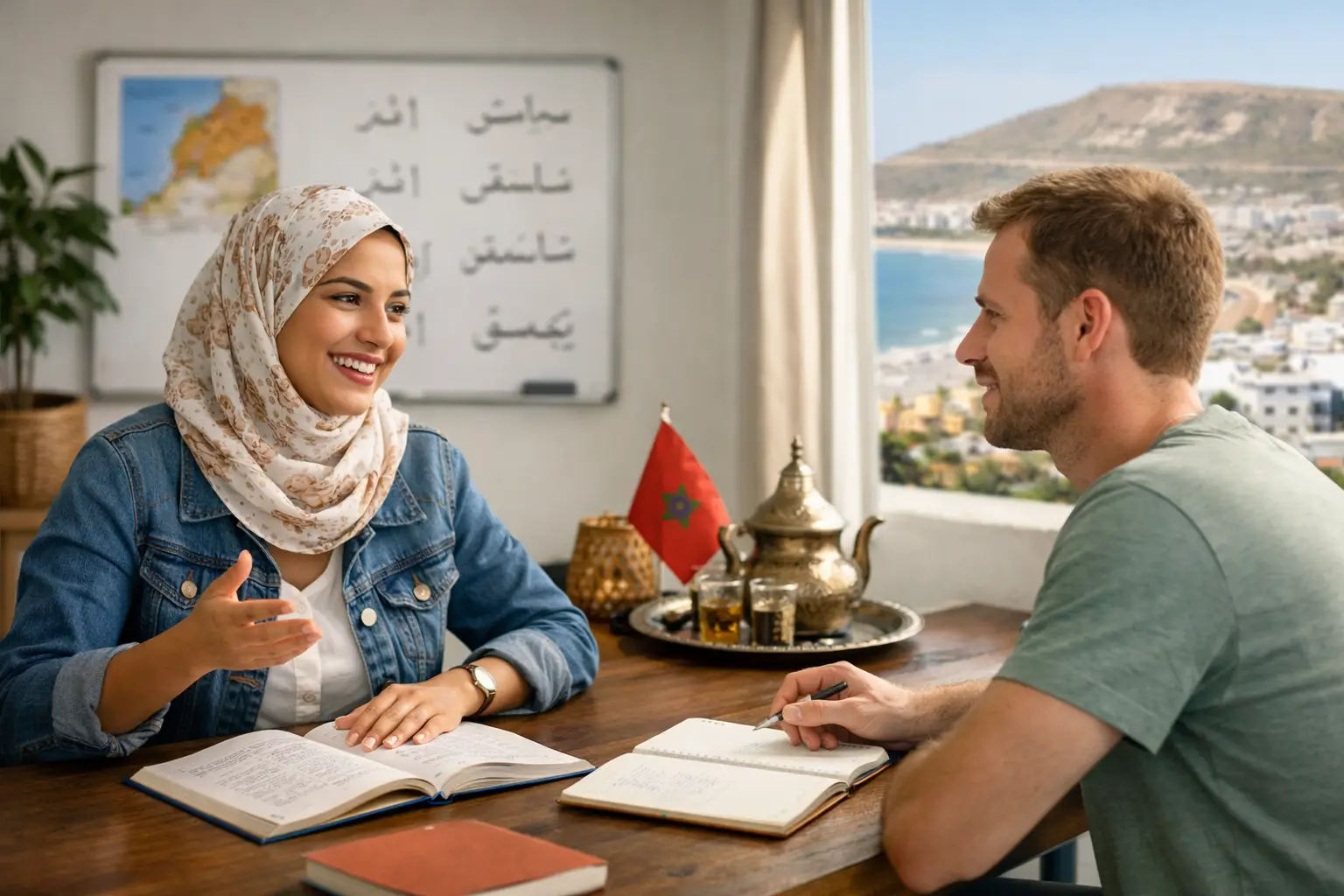
Moroccan Arabic Classes for Your Agadir Stay
Make your stay in Agadir more enjoyable by learning Moroccan Arabic (Darija) through local language classes, private lessons, and practical conversation courses
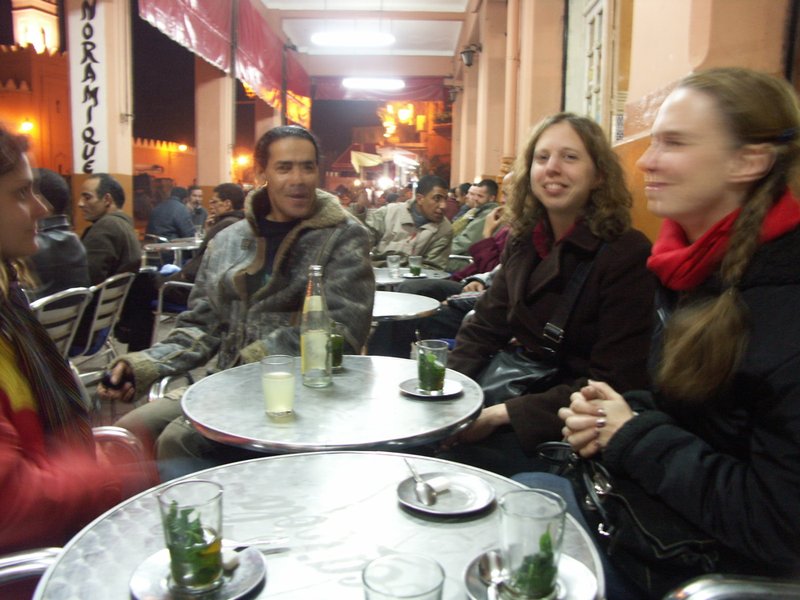
A warm greeting at a neighborhood café, a quick question to a taxi driver, a friendly exchange at Souk El Had - these small moments feel different when you can answer in Darija. Moroccan Arabic classes give visitors, new residents, and long-stay travelers a practical way to connect with Agadir beyond hotel check-ins and English-language menus.
Known locally as Darija, Moroccan Arabic is the everyday language heard across Agadir, Taghazout, Tamraght, Taroudant, and Tiznit. French is also widely used, and many people working in tourism speak English, but a few local phrases can make daily life easier and more personal. You do not need perfect grammar to order mint tea, ask for directions, or thank a shop owner. You only need enough confidence to start.
Why Learn Darija While You Are in Agadir?
Agadir is an easy place to settle into. Its wide beachfront, relaxed cafés, surf culture, and busy local neighborhoods make it especially appealing for travelers who want more than a quick resort stay. Learning Darija adds another layer to that experience.
For tourists, a short course can prepare you for common conversations: shopping for argan products, arranging transport, ordering grilled fish, or chatting with the people you meet on a day trip. For digital nomads and expats, classes can help turn routine errands into genuine local interactions. Families may find that a few phrases help children feel included during meals, market visits, and activities.
Darija also carries the humor and warmth of everyday Moroccan conversation. It is not simply Modern Standard Arabic spoken with a local accent. Vocabulary comes from Arabic, Amazigh languages, French, Spanish, and more, reflecting Morocco’s layered history and regional character. In the Souss-Massa region, you may also hear Tashelhit, an Amazigh language with deep local roots. A good teacher can explain when Darija is the right choice and introduce the cultural context behind the words.
What Moroccan Arabic Classes Usually Cover
The best beginner classes focus on language you can use the same day. Rather than spending every lesson on formal rules, expect practical vocabulary, pronunciation practice, short role-plays, and cultural guidance.
Early lessons often include greetings, introductions, numbers, time, food, directions, shopping, transportation, and polite expressions. You may practice asking how much something costs, explaining where you are staying, or saying that you do not understand. Many instructors teach common phrases in Arabic script, Latin letters, and sound-based pronunciation so beginners can choose the format that helps them learn fastest.
Pronunciation deserves attention because Darija has sounds that may be unfamiliar to English speakers. A patient instructor can help you hear the difference without making lessons feel like a test. The goal for a visitor is usually clear communication, not sounding like a native speaker after one week.
Darija and Formal Arabic Are Not the Same Course
When comparing classes, check whether the program teaches Darija, Modern Standard Arabic, or both. Modern Standard Arabic is used in formal writing, news, and many educational settings across the Arab world. Darija is what you are likely to hear while buying fruit in the market, asking about a surf lesson, or talking with neighbors.
Formal Arabic can be a great choice for learners with long-term academic, professional, or regional goals. But if your priority is everyday life in Agadir, a Darija-focused class is usually the more immediate fit. Some schools offer a combined approach, which works well for students staying several months and wanting a broader foundation.
Choosing Moroccan Arabic Classes That Fit Your Trip
The right format depends on how long you will be in Morocco and how you prefer to learn. A traveler with four free mornings before a surf trip to Taghazout needs something different from an expat planning a year in Agadir.
Group classes are often social, affordable, and motivating. They work well if you enjoy learning alongside other travelers or residents, especially when the class includes conversation activities. The trade-off is pace: the instructor must balance different skill levels, and you may not get much time to practice your own travel situations.
Private lessons offer more flexibility. You can focus on restaurant language, business communication, daily errands, or pronunciation challenges, and schedule classes around work or sightseeing. They usually cost more, but a few focused sessions can be valuable if your time is limited.
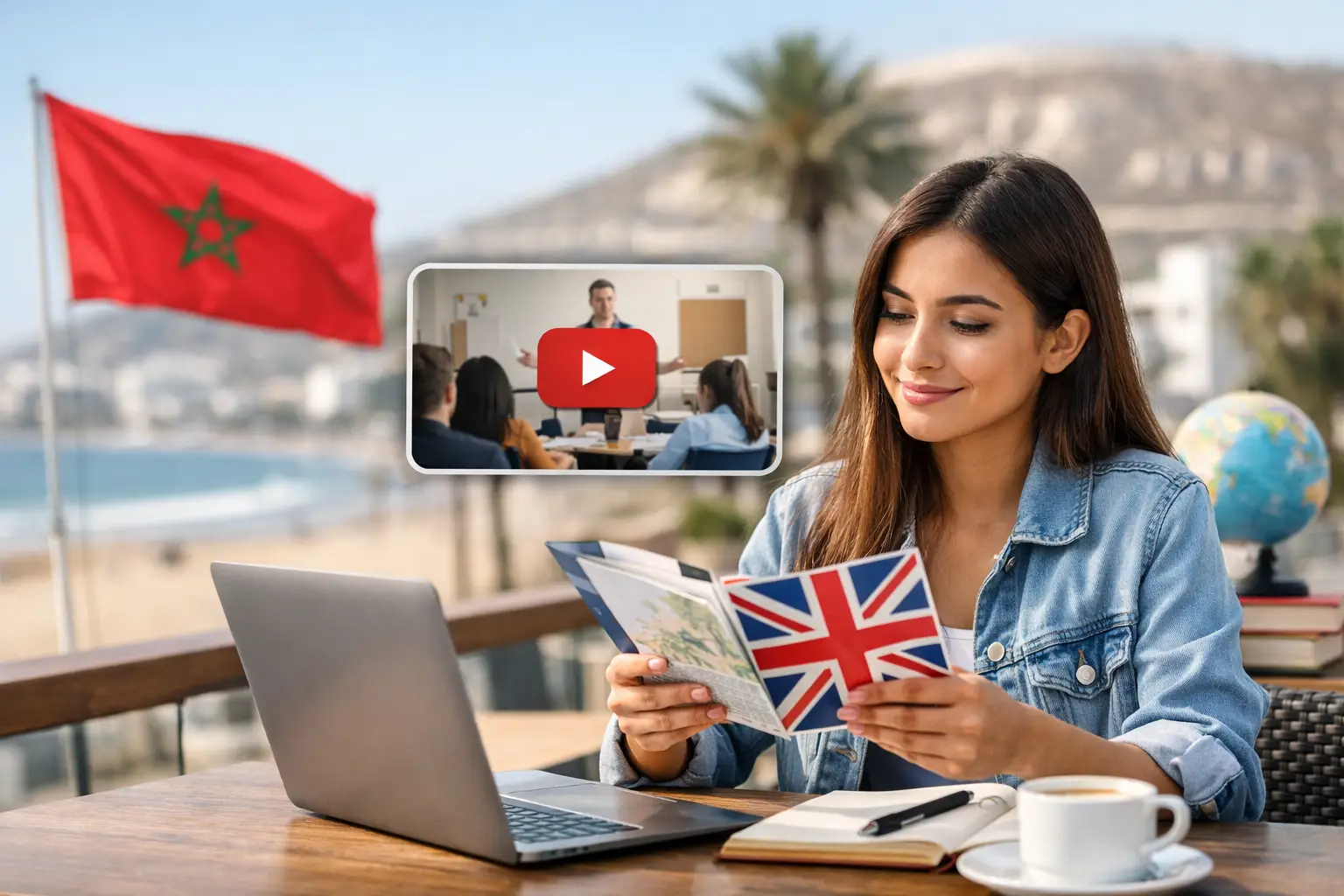
Online lessons are useful before you arrive or after you leave. Starting with a few virtual sessions means you can land in Agadir with essential phrases already familiar. However, in-person learning has a major advantage: you can immediately test what you learn in real conversations. A blended plan often works best - prepare online, then practice locally.
Intensive courses suit learners who want a structured routine, while casual weekly lessons are better for people balancing remote work, family plans, or a flexible holiday schedule. Before booking, ask about class size, lesson length, teaching language, level placement, and whether materials are included. If possible, request a trial lesson. The teacher’s style matters as much as the course outline.
Questions to Ask Before You Enroll
A polished website or a low price does not automatically mean a class will match your needs. Ask whether beginners are welcome, how much speaking practice is included, and whether lessons are built around Darija used in southern Morocco. Also check if the instructor can adapt examples for your situation, whether that is navigating Agadir with children, speaking to clients, or preparing for a longer move.
Location matters too. A classroom near the beach may be convenient for visitors staying in the tourist area, while a neighborhood-based setting can make regular attendance easier for residents. If you are staying in Taghazout or Tamraght, consider travel time before committing to several sessions in central Agadir. A course that looks perfect on paper is less useful if getting there becomes a daily hassle.
Look for transparent communication about scheduling and cancellations. Morocco runs at a friendly, flexible pace, but clear expectations help when you have airport transfers, tours, or work calls to coordinate.
Make Every Lesson Useful Outside the Classroom
Classes create the foundation. Daily practice is what makes the words stick. Pick one small challenge after each session: greet the cashier in Darija, ask a vendor the price, order breakfast without pointing at the menu, or thank someone using the phrase you learned.
Keep a short note on your phone with expressions you hear repeatedly. Write down the context as well as the translation. A phrase used between friends may not be appropriate in a formal shop or with an older person, and those details are part of learning the language well.
It also helps to accept that conversations will be imperfect. Moroccans are used to visitors learning a few words, and many people appreciate the effort. If you get stuck, smile, switch languages when needed, and try again later. Confidence grows through repetition, not through waiting until every sentence is correct.
For an experience that feels especially local, pair your study time with the places where everyday Agadir happens: a morning bakery, a neighborhood hammam reception, a small café, a taxi ride, or a market stall. Visit Agadir can help you discover the kinds of local businesses and experiences where those first conversations naturally take place.
Useful First Darija Phrases
Start with a handful of expressions you will use often. “Salam” is a simple hello, while “labas?” asks if someone is well. “Shukran” means thank you, and “afak” is a polite way to say please. “Bshhal?” is useful when asking the price, and “ma fhemtsh” means “I did not understand.”
Do not worry if spellings vary from one teacher or guide to another. Darija is commonly written in Arabic script, and Latin-letter spellings are often phonetic. Listening carefully and repeating phrases with a local speaker will take you further than memorizing one fixed spelling.
The most rewarding Moroccan Arabic classes do more than fill a free afternoon. They give you a reason to pause, listen, and take part in the daily rhythm around you. Begin with one greeting, use it with care, and let the next conversation lead you somewhere new.
Keywords: Moroccan Arabic Classes Agadir



Own a business in Agadir?
Get discovered by thousands of visitors.