Essential Darija Phrases
Unlock Agadir: Essential Darija Phrases for AFCON 2025 Visitors! A guide to connecting with locals and enriching your experience in Agadir. 1. Key Insights for Your Agadir Adventure 2. Mastering Greetings and Polite Expressions 3. Navigating Agadir: Souks, Taxis, and Direc
Unlock Agadir: Essential Darija Phrases for AFCON 2025 Visitors!
A guide to connecting with locals and enriching your experience in Agadir.
- 1.Key Insights for Your Agadir Adventure
- 2.Mastering Greetings and Polite Expressions
- 3.Navigating Agadir: Souks, Taxis, and Directions
- 4.Dining and Café Culture: Savouring Agadir's Flavors
- 5.When You Need a Little Help
- 6.Cultural Nuances for Deeper Connection
- 7.A Quick Look at the Language of Agadir
- 8.Visualizing Language Learning Impact
- 9.A Visual Guide to Essential Darija Phrases
- 10.Your Stay in Agadir: Beyond Language
- 11.FAQ: Your Darija Quick Guide
- 12.Conclusion
- 13.Recommended Further Reading
- 14.Referenced Search Results
Key Insights for Your Agadir Adventure
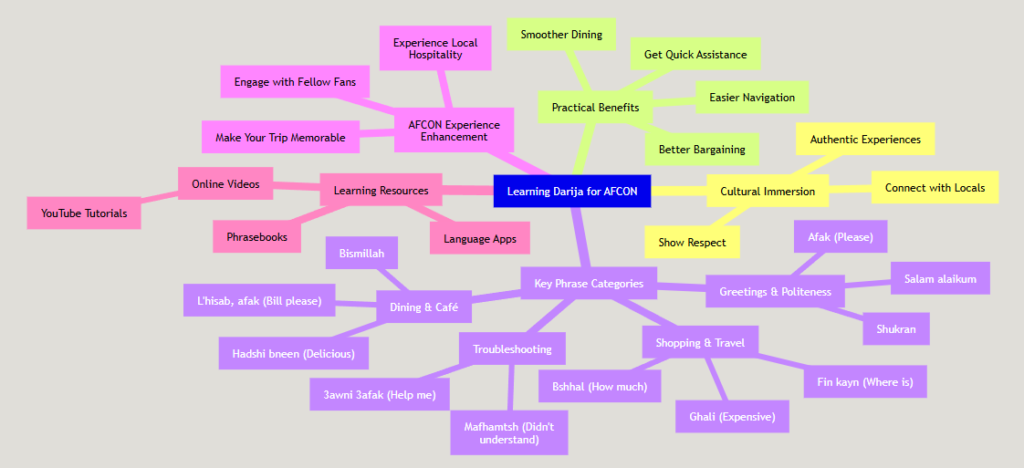
- Cultural Connection: Even a few words of Darija can significantly enhance interactions and show respect for local culture.
- Practical Navigation: Essential phrases for greetings, directions, shopping, and dining will streamline your experience in Agadir.
- Unforgettable Memories: Engaging with locals in their language creates more authentic and memorable travel moments.
Mastering Greetings and Polite Expressions
Everyday Welcomes
- As-salamu alaykum ( السلام عليكم ): The universal greeting meaning "Peace be upon you." This is appropriate in almost any situation.
- Wa alaykum as-salam ( وعليكم السلام ): The standard response to "As-salamu alaykum."
- Labas? ( لاباس ): A common way to ask "How are you?" or "Is everything good?"
- Labas, alhamdulillah ( لاباس الحمد لله ): The typical response to "Labas?", meaning "Good, thank God."
Essential Courtesies
- Shukran ( شكراً ): "Thank you." A simple yet powerful word.
- Afak or 3afak ( عفاك ): "Please." Crucial for making polite requests. It can also mean "excuse me" or "be kind."
- Smahli ( سمحلي ): "Excuse me / Sorry" (to a man).
- Smeh liya ( سمح ليا ): "I'm sorry / Excuse me" (general). For a female, you might hear "Samhi li".
- Mashi mushkil ( ماشي مشكل ): "No problem."
- Wakha ( واخة ): "Okay / Alright." Very common for an agreement.
- Baslama ( بالسلامة ): "Goodbye."
Navigating Agadir: Souks, Taxis, and Directions
Shopping Smart in the Souks
- Bshhal? ( بْشْحال ): "How much?" Your primary tool for negotiating prices.
- Ghali ( غالي ): "Expensive." Use this playfully to initiate bargaining.
- Ghali bzzaf ( غالي بزاف ): "Too expensive."
- Nqes shwiya ( نقص شوية ): "Lower it a little."
- Safi ( صافي ): "Enough/That's fine/OK." Can be used to signal that you've reached an agreement or are done.
- Bghit hadi ( بغيت هادي ): "I want this" (useful when pointing).
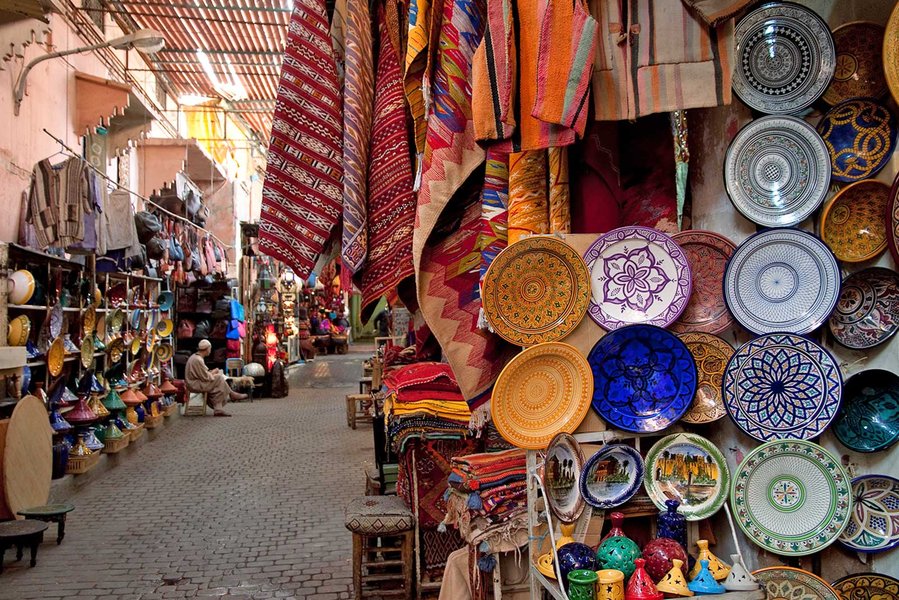
A vibrant marketplace, showcasing the rich tapestry of Moroccan commerce.
Getting Around Town
- Fin kayn...? ( فين كاين... ): "Where is...?" (e.g., Fin kayn stade? – "Where is the stadium?").
- Fin l'stade? ( فين الستاد؟ ): "Where is the stadium?" (specifically for AFCON fans).
- Bsh7al l-taxi? ( بشحال الطاكسي؟ ): "How much for the taxi?"
- Hna, 3afak ( هنا، عفاك ): "Here please" (to ask a driver to stop).
- Nishan ( نيشان ): "Straight."
- Limn ( ليمين ): "Right."
- Lisar ( ليسار ): "Left."
Dining and Café Culture: Savouring Agadir's Flavors
Ordering and Complimenting
- Bismillah ( بسم الله ): "In the name of God." Traditionally said before starting a meal.
- Bghit atay ( بغيت أتاي ): "I want mint tea."
- Bghit qahwa ( بغيت قهوة ): "I want coffee."
- L'hisab, 3afak ( الحساب، عفاك ): "The bill, please."
- Hadshi bneen ( هادشي بنين ): "This is delicious."
- Mzyan ( مزيان ): "Good / Fine / Great." A general compliment for food or service.
- Besseha ( بالصحة ): "Cheers!" or "Enjoy your meal!" Often said by a server or host after you take a drink or bite.
- Atay ( أتاي ): "Tea" (a staple of Moroccan hospitality).
- Lma ( الماء ): "Water."
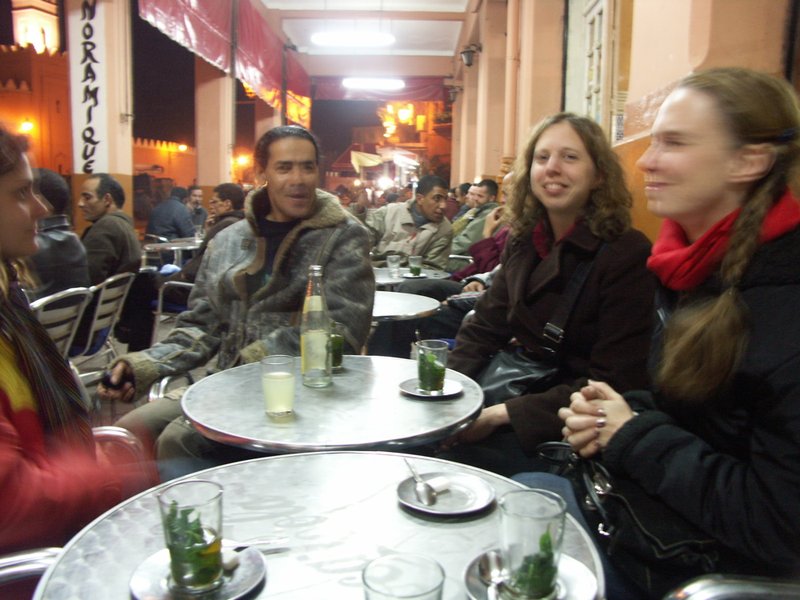
The serene ambiance of a Moroccan café is a perfect spot for mint tea.
When You Need a Little Help
- Mafhamtsh ( مافهمتش ): "I didn't understand."
- Hadr shwiya b-shwiya ( هضر شوية بشوية ): "Speak slowly, please."
- 3awni 3afak ( عاوني عفاك ): "Help me, please."
- La ( لا ): "No."
- Na'am ( نعم ) or Iyyeh ( إيه ): "Yes."
Cultural Nuances for Deeper Connection
- Always Greet First: Before asking a question or making a request, always start with "Salam" or "As-salamu alaykum." This polite opening is highly valued.
- Attempt is Appreciated: Moroccans genuinely appreciate any effort you make to speak Darija, even if your pronunciation isn't perfect. It shows respect and interest in their culture.
- Patience and Politeness: These go a long way. Maintain a friendly demeanor, and you'll find interactions to be more enriching.
 The radar chart above illustrates the perceived impact and ease of learning various categories of Darija phrases. "Greetings" score highly in both impact and ease, indicating that mastering them yields significant positive interactions with minimal effort. "Bargaining" has a high impact on interactions but is moderately easy to learn, requiring some practice. "Directions" and "Asking for Help" are crucial for practical navigation, offering moderate impact and ease, while "Dining" phrases provide a good balance for cultural immersion.
A Quick Look at the Language of Agadir
| Language | Prevalence in Agadir | When it's useful |
|---|---|---|
| Darija (Moroccan Arabic) | Universal | Everyday interactions, markets, local businesses, and authentic experiences |
| Standard Arabic | Formal contexts, written media | Reading signs, official communications (less common for spoken daily interactions) |
| French | Very common | Tourist areas, educated population, government, and business |
| English | Common in tourist areas | Hotels, restaurants, souvenir shops, with younger generations |
| Tamazight (Berber) | Significant presence | Rural areas, specific communities, and some older generations (less common in direct tourist interactions) |
| Spanish | Less common, some tourist areas | With some older locals, some tourist-focused establishments |
This YouTube video, "Moroccan Arabic: 20 Travel Expressions & Phrases you need to know!", offers practical pronunciation and context for many of the phrases discussed. It serves as an excellent audio-visual aid to complement your textual learning, helping you confidently attempt these phrases in Agadir.
Your Stay in Agadir: Beyond Language
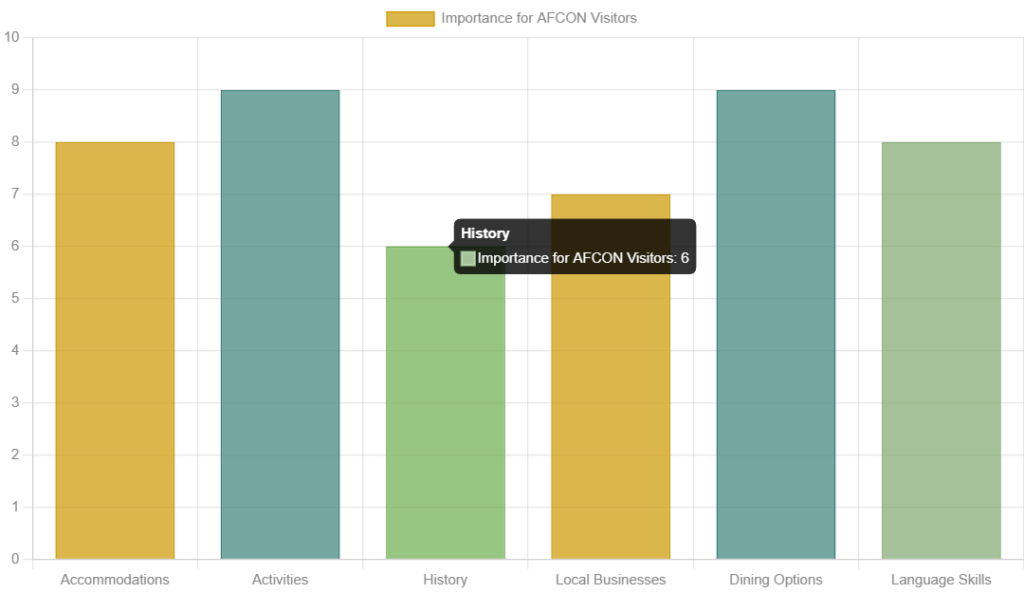 This bar chart visually represents the perceived importance of various aspects for AFCON visitors to Agadir, scaled from 0 to 10. Activities and dining options score highest, reflecting the desire for engaging experiences and good food. Accommodations and language skills are also highly valued for a comfortable and connected trip. Understanding local businesses and the city's history, while slightly lower, still significantly contributes to a richer and more informed travel experience.
FAQ: Your Darija Quick Guide
What is Darija?
Conclusion
Recommended Further Reading
Referenced Search Results


Timlalin Domes
Hotels & Accommodation
Hilton Taghazout Bay Beach Resort & Spa
Hotels & Accommodation

Generation Cars location voiture Agadir, location voiture Agadir aéroport sans caution, Car rental Agadir
Transport & Car Rental

Centre Dentaire Amzil agadir
Health & Wellness
Own a business in Agadir?
Get discovered by thousands of visitors.