
Agadir Language Schools Guide for New Learners
Discover local language centres, explore French, English, German, and other language courses, compare learning options, and find practical tips for choosing the right school as a beginner.
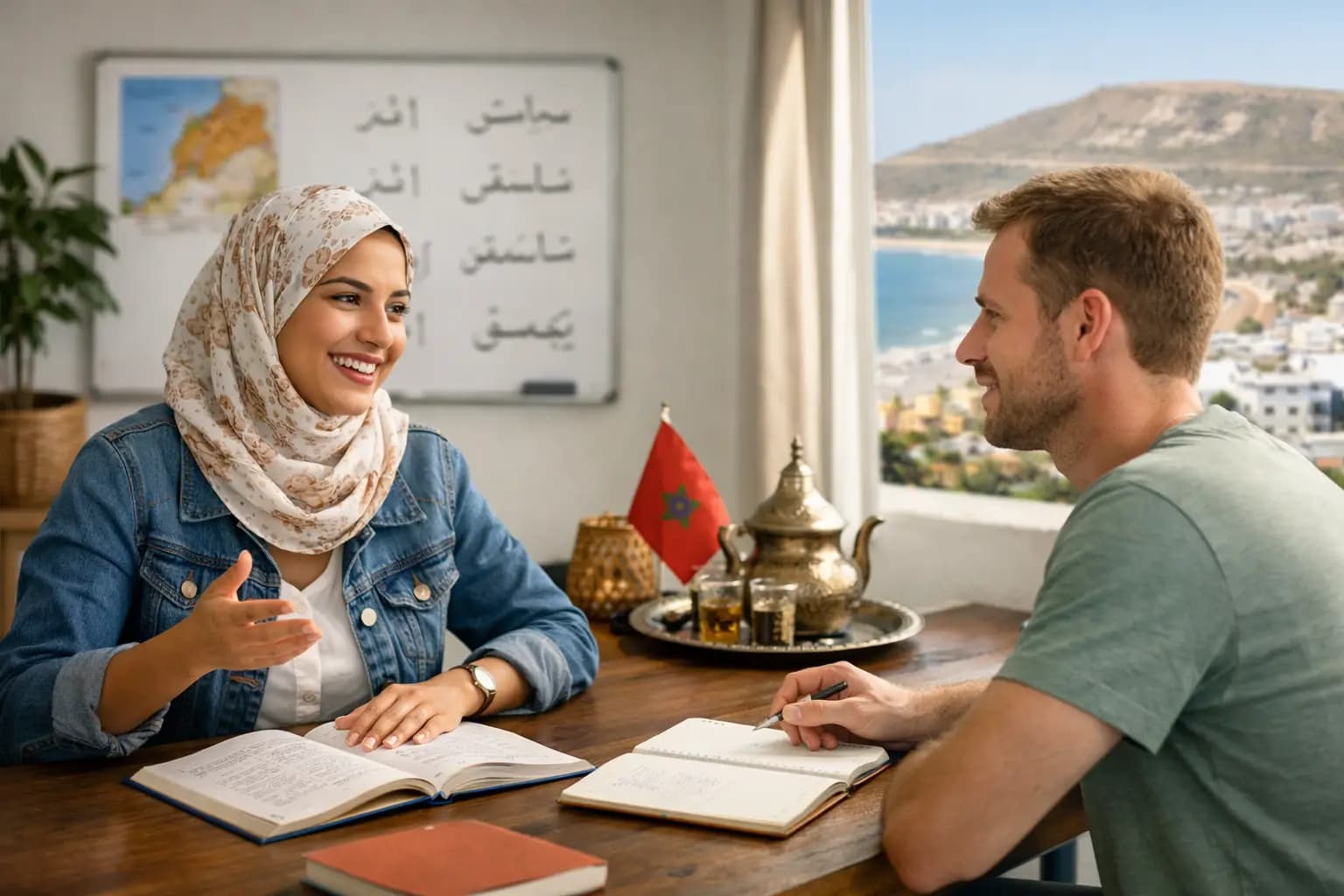
A morning class can change the way you experience Agadir. Instead of pointing at a menu or relying on translation apps, you can greet a shop owner in Darija, order coffee with confidence, and follow more of the conversation around you. This Agadir language schools guide helps travelers, expats, digital nomads, and local residents choose a course that fits both their goals and their time in the city.
Agadir is a practical place to study because learning does not stop when class ends. French is widely used in shops, services, and business settings. Moroccan Arabic, known locally as Darija, brings daily life closer. Standard Arabic opens the door to formal communication, media, and deeper study, while Amazigh language and culture add another meaningful local dimension to discover in the Souss region.
Start With the Language You Actually Need
The best school is not always the one offering the longest course or the busiest schedule. It is the one that teaches the language you will use most often. Before comparing programs, decide what a successful first month in Agadir looks like for you.
If you are staying for a short holiday, beginner Darija lessons can make everyday interactions warmer and easier. Focus on greetings, numbers, taxi directions, food, shopping, and polite expressions. A traveler spending several weeks in the city may benefit from a mixed program that introduces both Darija and French.
For relocation, work, university plans, or long-term travel in Morocco, French often deserves serious attention. It is useful for handling appointments, reading signs and documents, communicating with service providers, and building a wider social and professional network. French classes may also suit learners who already have a basic foundation from school and want to regain confidence.
Darija, Standard Arabic, and Amazigh Are Different Paths
Arabic courses can mean very different things, so ask the school to be specific. Darija is Morocco's spoken dialect and is the fastest route to casual local conversation. Modern Standard Arabic, often called MSA or fusha, is used in formal writing, news, education, and across the Arabic-speaking world, but it is not the language most people use with friends at a cafe.
Some learners choose both: Standard Arabic for grammar, reading, and long-term progression, then Darija for daily life in Agadir. This can be an excellent combination, although it requires more study time and patience. Do not assume that a general Arabic course includes Darija practice unless the program says so.
The Agadir region also has a strong Amazigh heritage, particularly the Tashelhit language spoken in much of southern Morocco. Full beginner courses may be less common than Arabic or French programs, but cultural workshops, conversation opportunities, and locally focused activities can add valuable context to your stay.
Choose an Agadir Location That Supports Your Routine
A school address matters more than it seems. A great class across town can become a poor fit if the commute cuts into beach time, work calls, or family plans. Look at the location alongside your accommodation, not separately from it.
Central Agadir and Talborjt can be convenient for visitors who want easy access to restaurants, markets, transport, and everyday city life. Founty and the beach area may work well for travelers staying near resorts or the promenade, though travel time to class can vary. Hay Mohammadi and other residential areas may offer a more local rhythm, often with less tourist activity between lessons.
If you are based in Taghazout or Tamraght, check the commute carefully before committing to several days each week in Agadir. The distance is manageable for a focused intensive course, but regular transport can shape your schedule. In that case, private online sessions, a weekend class, or a shorter in-city course may be the more comfortable choice.
A school near a place where you can practice is a real advantage. Think of a neighborhood cafe, bakery, market, coworking space, or sports club as part of your learning environment. The classroom gives you structure; the city gives you repetition.
Compare Class Formats Before You Compare Prices
Course fees matter, but the lowest price does not always offer the best value. A small group with regular speaking practice can move a beginner forward faster than a large class with limited conversation time. On the other hand, group lessons can be more social and affordable, especially for solo travelers hoping to meet people.
Private classes are best for a tightly defined goal. You may want French for a job interview, Darija for communicating with your partner's family, or practical language for an upcoming road trip through southern Morocco. One-to-one lessons can adapt quickly to those needs, and they may be easier to schedule around remote work.
Intensive programs suit learners who can give the language their full attention for one or two weeks. They create momentum, but they can also be tiring, particularly when paired with sightseeing and late dinners. Part-time classes are a better match for digital nomads, parents, and visitors who want room for surf sessions, tours, or work commitments.
When reviewing an Agadir language school, ask about average class size, weekly teaching hours, lesson length, the balance between grammar and speaking, and whether materials are included. Also confirm the level assessment process. A quick placement conversation is usually more useful than choosing a level based on an online description alone.
Look for Teaching That Works Beyond the Classroom
A memorable language course should prepare you for real moments: asking a taxi driver to stop near the souk, understanding the price of fresh fruit, introducing yourself to neighbors, or arranging a surf lesson. Schools that use role-play, local vocabulary, and guided conversation practice tend to be especially useful for visitors.
Ask whether teachers are native or highly fluent speakers of the language they teach and whether they have experience with adult beginners. A friendly personality helps, but clear correction matters too. The strongest teachers encourage you to speak without embarrassment while showing you how to say things more naturally.
Cultural activities can be a welcome extra, not a replacement for solid instruction. A cooking session, market visit, calligraphy workshop, or city walk becomes more valuable when it connects directly to lesson vocabulary. If an activity is included, find out whether it is led by a teacher, how often it runs, and whether there is an additional fee.
For families, check the minimum age, safeguarding arrangements, and whether the school can adapt lessons for teens or younger learners. For professionals, ask about invoices, flexible scheduling, and business French or Arabic options. A course should fit your life in Agadir rather than force every other plan around it.
Questions to Ask Before You Book
Clear answers now prevent frustration later. Contact the school directly and ask what language variety is taught, how many students are expected in your group, and whether a trial lesson is available. Confirm the exact start date, cancellation policy, payment method, and whether classes pause during public holidays or Ramadan.
It is also worth asking how much homework is expected. Some visitors want a relaxed introduction with a few phrases each day. Others want worksheets, vocabulary reviews, and measurable progress. Neither approach is better, but they lead to very different experiences.
If you need a visa-related document, certificate, or proof of attendance, raise that requirement before paying a deposit. Schools may have different attendance rules and timelines for issuing paperwork. For long stays, ask whether there is a discount for booking several weeks or continuing into the next level.
Make Agadir Part of Your Study Plan
The most rewarding learners build small habits around class. Order breakfast in French or Darija, keep a note of new words you hear at the market, and practice one short conversation each day. You do not need to turn every outing into homework. A little regular use makes vocabulary stick far better than a single long review session.
Agadir offers plenty of low-pressure places to practice. Start with greetings at local shops, then move toward simple questions at cafes and markets. Be polite, smile, and accept corrections with good humor. Many people will switch to English or French to help you, especially in tourist areas, so let them know kindly that you are practicing.
Visit Agadir can help you shape the rest of your stay around your course, from finding a neighborhood cafe for post-class review to choosing activities where local interaction comes naturally. Language learning is also a reason to look beyond the hotel zone and experience the everyday character of the city.
A good school gives you a starting point. The conversations you have afterward, whether at a bakery counter, on a shared taxi, or during a sunset walk along the Corniche, are where Agadir begins to feel less like a destination and more like a place you know.
Keywords: Agadir language schools



Own a business in Agadir?
Get discovered by thousands of visitors.
