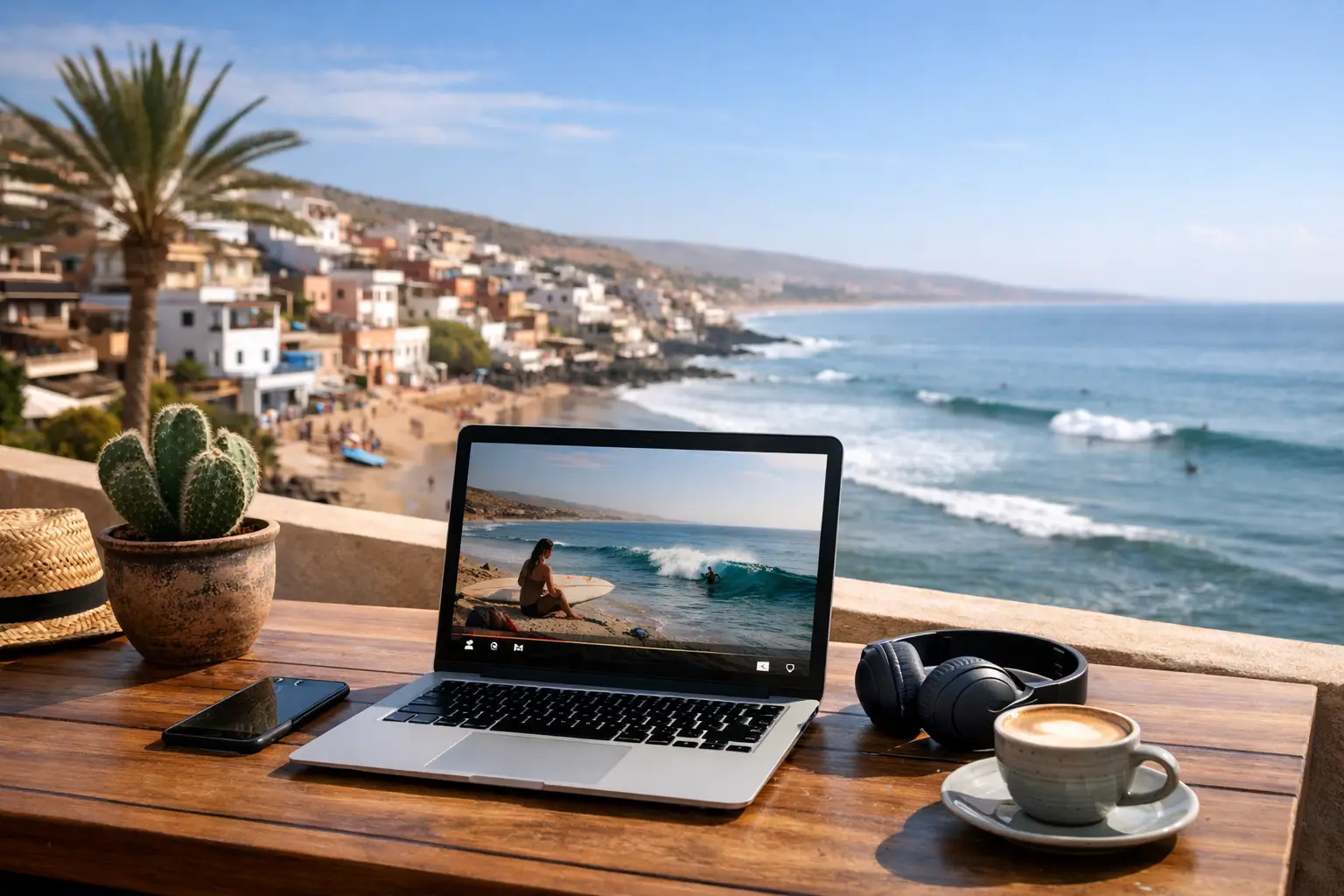
Taghazout Remote Work Guide
Thinking about working remotely from Taghazout? Discover the best places to stay, coworking spaces, cafés with Wi-Fi, cost of living, and tips for digital nomads.
You can finish a morning call with your laptop open, close it at noon, and be in the water before lunch. That is the appeal behind any Taghazout remote work guide - this small surf town north of Agadir makes work feel lighter without pretending to be a polished big-city hub. If you are considering a stay here, the real question is not whether Taghazout is beautiful. It is whether its pace, infrastructure, and trade-offs fit the way you work.
Why Taghazout works for remote workers
Taghazout has become one of the easiest places in coastal Morocco for digital nomads to picture themselves staying a few weeks or a few months. The setting does a lot of the heavy lifting. You get ocean views, walkable streets, surf culture, cafes with a steady flow of travelers, and quick access to Agadir when you need more services.
That said, Taghazout is not a classic remote work city. It is a beach town first. That is exactly why many people love it, but it also shapes the experience. If you need corporate-grade reliability, late-night productivity spaces, or endless apartment inventory, you will notice the limits. If you want a slower routine with enough comfort to work well and plenty to enjoy outside work hours, Taghazout makes a strong case.
The biggest advantage is balance. You can keep your workday simple, avoid long commutes, and spend more time outdoors. For freelancers, founders, creatives, and remote employees with flexible schedules, that can be more valuable than having every urban convenience within walking distance.
Taghazout remote work guide: what to expect day to day
Daily life here tends to feel compact. Most essentials are close together, and many people move around on foot. Your choice of accommodation matters more than in a larger destination because a good setup can save you from chasing better Wi-Fi or quieter space every day.
Mornings are often the best work window. Cafes are calmer, the weather is comfortable, and internet speeds are usually more stable before the busiest hours. Afternoons can pull you outside, especially if the surf is good or the beach is calling. That rhythm is part of the draw, but it also requires discipline if your job depends on fixed output rather than flexible hours.
Evenings are relaxed. Some remote workers love that. Others start to miss the variety of a city after a couple of weeks. It depends on whether you want stimulation or simplicity after work.
Wi-Fi and coworking reality
Internet in Taghazout is workable, but you should not assume every apartment or cafe is equally reliable. Some places are perfectly fine for emails, calls, and regular online tasks. Others will frustrate you the minute you need uninterrupted video meetings or heavy uploads.
The safest move is to ask specific questions before booking accommodation. Do not settle for “good Wi-Fi.” Ask for actual speed, whether the router is private or shared, and whether there are frequent outages. If your work is sensitive, bring a local SIM-based backup so you are not depending on one connection.
Coworking options and work-friendly cafes can make a big difference, especially if your rental is better for sleeping than working. In Taghazout, the best setup is often a mix: work from home for focused tasks, then use a cafe or shared workspace when you want a change of scene. Flexibility matters more here than finding one perfect base.
Best areas to stay
Central Taghazout is the most convenient if you want to walk to cafes, restaurants, the beach, and surf spots. It feels lively and social, which is ideal if you want community. The trade-off is noise. Streets can stay active, and some rentals are charming but not especially quiet.
If you prefer a calmer stay, look at spots slightly outside the busiest center or consider nearby Tamraght. It is close enough to enjoy the same coastal lifestyle while often feeling a bit more spacious and less crowded. Many remote workers end up comparing both because the right choice depends on whether you prioritize buzz or breathing room.
For longer stays, think beyond photos. A sea view is great, but a proper desk, strong connection, decent kitchen, and manageable noise level will shape your week much more than a stylish terrace.
Cost, comfort, and where the budget goes
Taghazout can be affordable compared with many digital nomad hotspots, but prices shift with season and demand. Peak surf periods and holiday windows can push accommodation costs up fast. Short stays usually cost more per night, while monthly rates can bring much better value.
Food spending depends on your habits. Local spots and simple meals keep daily costs manageable. Trendier cafes, regular brunches, imported products, and frequent eating out will move your budget higher than expected. It is not hard to live well here, but it is also easy to pay a premium for convenience and atmosphere.
The main comfort question is not just price. It is consistency. A cheaper apartment that interrupts your workflow can become expensive in a different way. For remote workers, paying a little more for stronger internet, better bedding, and a practical work area is often worth it.
Is Taghazout good for focused work?
Yes, for the right kind of worker. If your schedule is flexible and you do well in a laid-back environment, Taghazout can be productive because life is simple. There are fewer distractions of the urban kind, and the setting can improve your energy fast.
If you need total control over your environment, it gets more complicated. Construction noise, street sounds, shared internet, and the natural temptation to spend every sunny afternoon outside are real factors. This is not a destination that does all the discipline for you. It gives you a great backdrop, then leaves the structure to you.
That is why many people do best here with a realistic plan. Keep your most demanding tasks for the morning, build in backup internet, and avoid assuming your rental will function like a home office in a major city.
Food, coffee, and life outside your laptop
One reason Taghazout keeps pulling people back is that remote work here does not feel like all work. Between the beachside atmosphere, casual dining, and easy social energy, it is simple to build a routine that feels enjoyable rather than repetitive.
You will find everything from quick local meals to healthy breakfast spots and coffee-friendly places where people open laptops for a few hours. Some cafes are better for working than others, and policies can vary, especially during busy periods. The best approach is to read the room. Order well, avoid taking a prime table for half a day during rush times, and have a second option in mind.
Outside work, surfing is the obvious headline, but it is not the only reason to stay. Walks along the coast, day trips, yoga sessions, and sunset breaks all help make the work-life mix feel richer. That is where Taghazout stands out. It does not just give you somewhere to log on. It gives you a setting that makes your off-hours count.
Getting around and staying connected to Agadir
Taghazout is small enough that you may not need much transport day to day. For airport access, bigger shopping runs, coworking alternatives, or errands that require more services, Agadir becomes your practical extension of town life. That nearby connection is one of Taghazout’s strongest advantages.
You get the charm of a surf village without being completely isolated. If you need banking, larger supermarkets, broader dining choices, or urban conveniences, Agadir helps fill the gaps. For many travelers using Visit Agadir to plan their stay, that regional mix is exactly what makes the coast appealing.
Transport options vary by comfort and budget. Taxis are useful for shorter rides, while some longer-stay visitors prefer a rental if they plan to move around often. If you are only here to work, surf, and eat well, you can keep things very simple.
When to go for the best remote work stay
The best time depends on what kind of stay you want. Cooler months can feel more comfortable for working during the day and are especially attractive if surfing is part of the plan. They are also more popular, which can mean higher prices and less flexibility on rentals.
Warmer months bring a different energy and can be great if you want long evenings and plenty of beach time, but some remote workers find the heat less ideal for deep focus, especially in places without strong ventilation or air conditioning.
If your schedule allows it, shoulder seasons often hit the sweet spot. You may get better value, a calmer atmosphere, and an easier time finding accommodation that actually matches your work needs.
Who should choose Taghazout - and who should not
Taghazout is a smart choice for remote workers who want nature, simplicity, and a social coastal atmosphere. It suits people who can adapt, enjoy informal settings, and do not need a perfect business environment every hour of the day.
It may not be the best match if your job depends on guaranteed high-speed internet, private office conditions, or the convenience of a larger city. In that case, you might still enjoy Taghazout, but probably as part of a wider Agadir-region stay rather than your only base.
The sweet spot is staying honest about what you need. Taghazout is easy to romanticize, and for good reason. The view is real. The lifestyle is real. The trade-offs are real too. If those trade-offs fit your work style, this coast can give you one of the most enjoyable remote work routines in Morocco.
If you come with a clear plan, a flexible mindset, and room in your schedule to actually enjoy where you are, Taghazout can be more than a work stop - it can be the part of your trip you keep talking about after you leave.
Keywords: Taghazout remote work





Own a business in Agadir?
Get discovered by thousands of visitors.