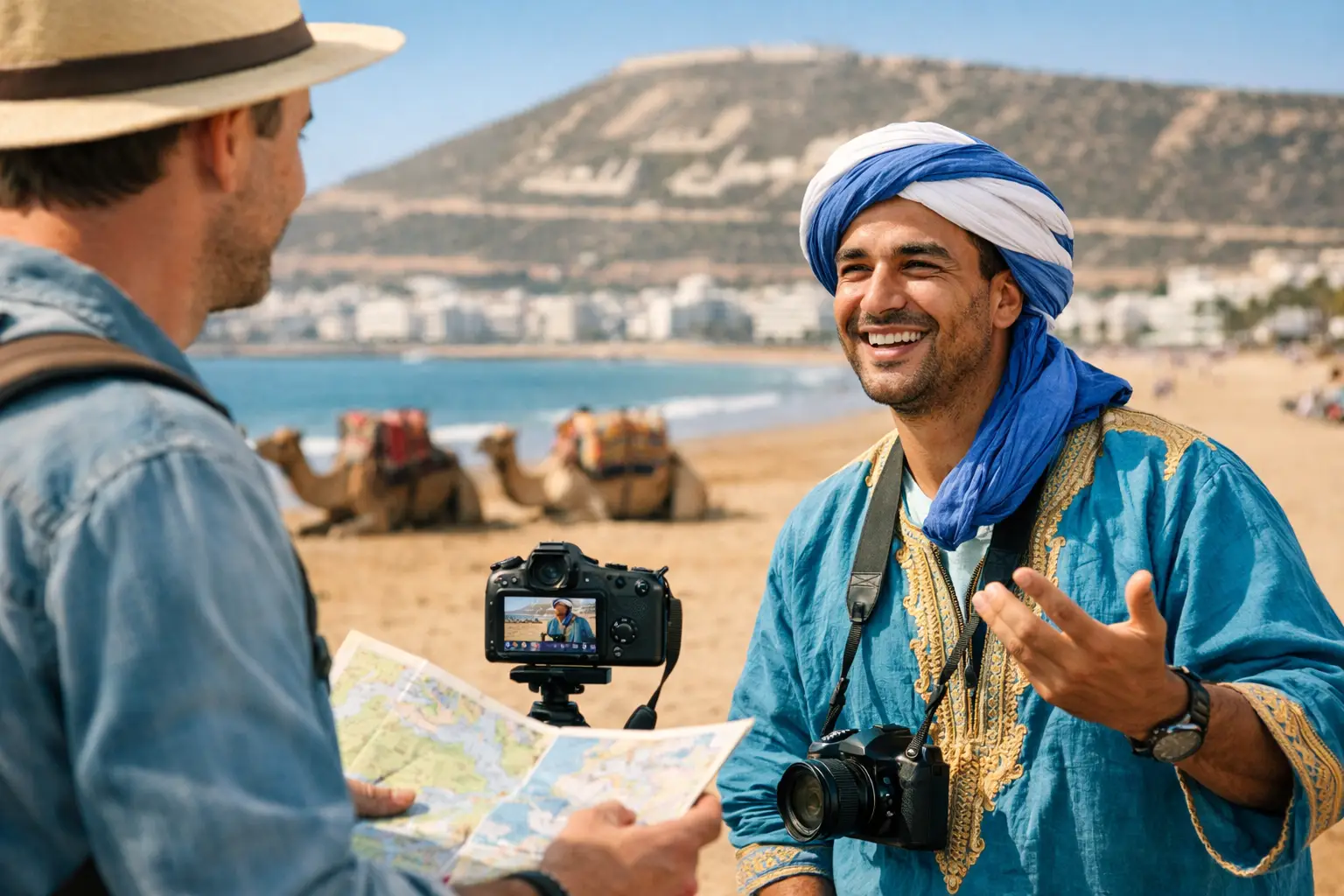
How to Find Local Guides in Agadir and Beyond
Discover how to find trusted local guides in Agadir and nearby destinations. Learn where to book guided tours, what to look for, and how to choose the right guide for your trip.
A great local guide can turn a stop at the Kasbah into a story about Agadir’s rebuilding, make a market visit feel relaxed instead of overwhelming, or help you find the quieter beach paths beyond Taghazout. Knowing how to find local guides is less about booking the first name that appears online and more about matching the right person to the experience you want.
Whether you are visiting Agadir for a long weekend, working remotely from Tamraght, or planning a family day in Taroudant, a local guide can add context, confidence, and flexibility to your time in Morocco. The key is to look beyond a generic tour description and ask a few practical questions before you commit.
Start With the Experience You Actually Want
“Local guide” can mean very different things in and around Agadir. One traveler may want a licensed city guide for Agadir Oufella and the central souk. Another may be looking for a surf host in Taghazout, a food-focused guide for Moroccan specialties, or a driver-guide for a day trip toward Paradise Valley, Tiznit, or Essaouira.
Begin by deciding what kind of day you want. A historical tour works best with someone who knows the region’s Amazigh heritage, earthquake history, architecture, and cultural landmarks. A market visit calls for a guide who is patient, speaks your language clearly, and understands how to help visitors browse respectfully without pressure. For outdoor plans, local knowledge of weather, tides, road conditions, and walking routes matters more than a polished sales pitch.
Be specific when you inquire. Instead of asking, “Do you offer tours?” explain that you want a two-hour walking tour, a family-friendly food outing, an accessible route, a private surf-area exploration, or a full-day excursion with pickup. The clearer your plan, the easier it is to tell whether a guide is a real fit.
How to Find Local Guides With Reliable Local Knowledge
Start with destination directories and established local businesses that clearly describe their services, service areas, and contact details. A regional discovery platform such as Visit Agadir can be useful for comparing tour operators, activity providers, restaurants, and local services in one place, especially when you are deciding between Agadir, Marina, Taghazout, Tamraght, Taroudant, and Tiznit.
Hotels, riads, surf camps, and reputable activity centers can also be helpful starting points. Their recommendations are often based on guests’ experiences, but it is still worth doing your own check. Ask whether the recommendation is for a particular guide or simply the provider they call most often.
Personal recommendations carry weight, particularly from travelers with similar interests. A couple looking for an easygoing food walk may have very different expectations from a solo hiker seeking a challenging mountain route. Read recent feedback with that in mind. Look for details about punctuality, communication, route knowledge, respect for the group’s pace, and whether the experience matched the description.
A guide with a few thoughtful, recent reviews can be a better choice than one with hundreds of vague comments. The most useful reviews mention what the guide did well: explaining local customs, adapting when children were tired, finding a quieter viewpoint, helping with translation, or handling a change in weather calmly.
Check credentials when the activity calls for them
For formal sightseeing and cultural tours, ask whether the guide is licensed or officially authorized for the type of tour being offered. This is especially sensible for major heritage sites, structured city tours, and excursions where historical interpretation is central to the experience.
For adventure activities, ask about the operator’s experience, equipment, group size, and safety arrangements. A guide taking you into mountain terrain or leading a water-based activity should be able to explain the plan clearly, including what happens if conditions change. Do not assume that local familiarity alone replaces proper preparation.
Not every casual experience requires the same level of certification. A neighborhood food host or artisan workshop leader may offer something informal and excellent. The trade-off is that you should be even more direct about expectations, timing, price, transport, and what is included.
Ask the Questions That Prevent Bad Surprises
Before booking, have a short conversation by phone or message. A good guide will welcome clear questions and answer without making you feel rushed. Confirm the meeting point, start and end time, total cost, payment method, transport, entrance fees, meals, and whether the tour is private or shared.
Language is another practical consideration. English is widely used in tourism, but levels vary. If you want detailed history or complex cultural discussion, ask how the guide usually leads tours for English-speaking visitors. For simple navigation and a relaxed local outing, conversational English may be more than enough.
It also helps to ask about the guide’s style. Some travelers enjoy a structured itinerary with set stops and lots of information. Others want room to linger over tea, take photos, browse shops, or follow a recommendation that comes up during the day. Neither approach is better, but they create very different experiences.
If you are traveling with children, older relatives, or anyone with mobility needs, say so early. Agadir’s beachfront promenade is easy to enjoy, while some viewpoints, old medina areas, and rural trails may involve uneven ground, steps, heat, or longer walks. A thoughtful guide can adjust the route. A vague answer is a sign to keep looking.
Compare Value, Not Just the Lowest Price
A low price can be appealing, especially when you are budgeting for a full Morocco itinerary. But the cheapest option may be a large group, a shortened route, unclear inclusions, or a shopping-focused stop you did not ask for. On the other hand, a higher private-guide rate may include hotel pickup, flexible timing, transport, and a more personal experience.
Compare like with like. A three-hour walking tour is not directly comparable to a full-day driver-guide experience. Check whether the quote includes fuel, entry tickets, lunch, refreshments, equipment, and pickup from your neighborhood. If a price seems unusually low or high, ask why.
Be alert to pressure tactics. You should not feel pushed to book immediately, pay an unclear deposit, or visit particular shops as a condition of the tour. A local guide may recommend trusted artisans or restaurants, and that can be genuinely useful. The difference is whether you are free to say no and continue enjoying the day.
Choose a Guide Who Respects the Place
The best guides make a destination feel more accessible without turning it into a backdrop. In Agadir and the Souss region, that means respecting local communities, religious spaces, artisans, natural areas, and everyday routines.
A responsible guide will explain local etiquette when it is relevant, encourage appropriate dress in more traditional settings, and avoid treating people as photo opportunities. They should also be honest about conditions. Paradise Valley, for example, can feel very different depending on rainfall, season, crowds, and access. A good guide sets realistic expectations rather than promising the same experience every day of the year.
For food experiences, ask how dietary needs are handled. Moroccan cuisine offers wonderful choices for many visitors, from tagines and grilled seafood to vegetable salads and fresh bread, but it is wise to discuss allergies, vegetarian preferences, and spice tolerance in advance. Clear communication keeps the focus where it belongs: enjoying the meal.
Make Your First Meeting Count
When you meet your guide, take a minute to confirm the plan before setting off. Mention anything that changed, such as a slower walking pace, a desire to spend more time at the souk, or a must-see place you discovered the night before. This is also the time to agree on how you will handle additional costs.
Keep your essentials with you, including water, sun protection, comfortable shoes, and a charged phone. Coastal Agadir can be breezy, but the sun is still strong, and inland destinations can be considerably warmer. For market visits, carry only what you need and enjoy the atmosphere without displaying valuables.
Tipping is appreciated in many tourism settings, but it should reflect your satisfaction and budget. If the guide was punctual, knowledgeable, attentive, and flexible, a tip is a warm way to show appreciation. It should never be demanded or used to create discomfort.
The right guide does more than point out landmarks. They help you notice the details that make a place memorable: the rhythm of morning at Souk El Had, the changing colors above the Atlantic, the craft behind a small workshop, or the road that leads beyond the resort strip. Give yourself time to choose well, then let local insight shape a day you could not have planned from a map alone.
Keywords: local guides in Agadir






Own a business in Agadir?
Get discovered by thousands of visitors.