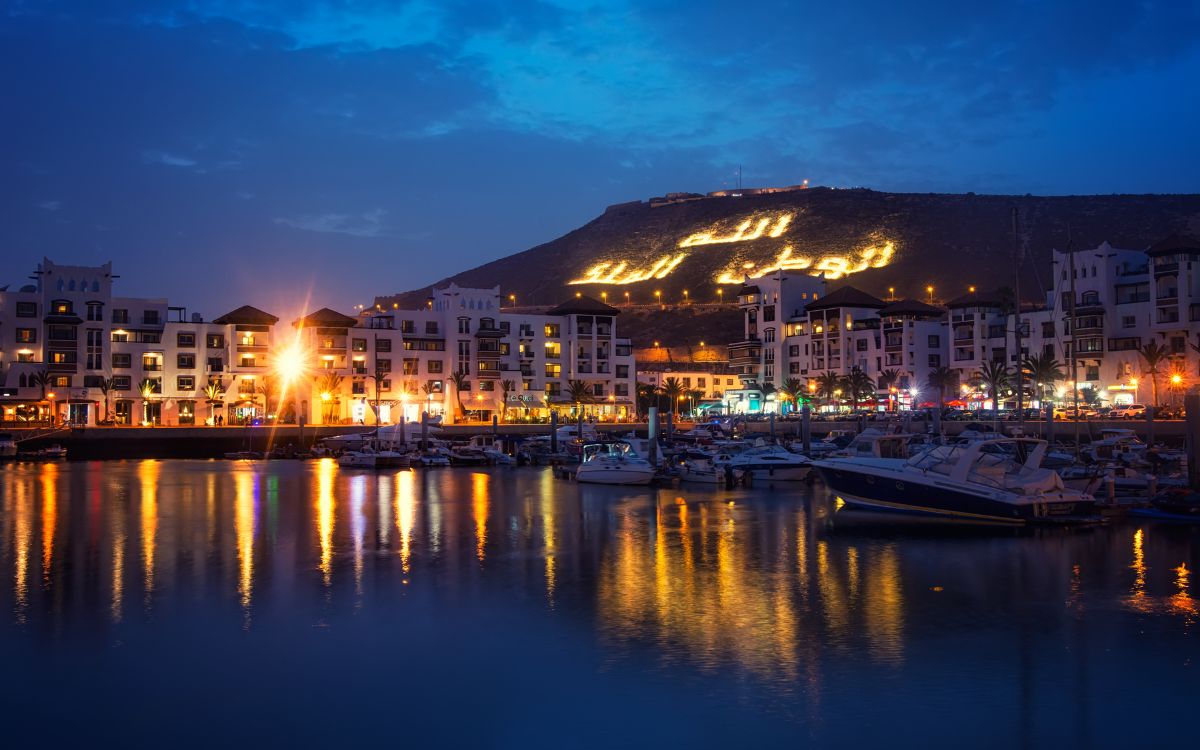
The History of Agadir
The History of Agadir Agadir, a gem on Morocco's southern coast, encapsulates a rich tapestry of history, resilience, and transformation. Its story is not just one of a thriving tourist destination but a narrative of rebirth from the ashes of adversity. Early Beginnings: A Fishin
The History of Agadir
Agadir, a gem on Morocco's southern coast, encapsulates a rich tapestry of history, resilience, and transformation. Its story is not just one of a thriving tourist destination but a narrative of rebirth from the ashes of adversity.
Early Beginnings: A Fishing Village
The history of Agadir begins as a humble fishing village. The area was initially settled by the Berbers, an indigenous group in North Africa, long before it caught the attention of the outside world. Its strategic location near the Atlantic Ocean made it an ideal spot for fishing and trade. For centuries, Agadir's way of life revolved around these simple, yet vital activities, forming the backbone of its early economy.
Portuguese Influence and Fortification
The 15th century marked a turning point for Agadir. The Portuguese, drawn by its strategic position and the potential for trade expansion, established a trading post and built a fortress here, known as the Kasbah. This fortification, "Agadir Oufella," became a pivotal part of the city's history, offering a glimpse into its early interactions with European powers.
Transition to Moroccan Control
The Portuguese influence was relatively short-lived. By the mid-16th century, the Saadian dynasty, a Moroccan ruling family, took control of Agadir, integrating it more deeply into Moroccan territory. This period saw Agadir flourish as a key trading center, particularly in gold, spices, and sugar, linking Morocco with Sub-Saharan Africa and Europe.
The Earthquake of 1960: A Turning Point
The most defining moment in Agadir's recent history occurred on February 29, 1960. A devastating earthquake, measuring 5.7 on the Richter scale, struck the city. It was a catastrophe of immense proportions, destroying much of the city and claiming thousands of lives. The Kasbah, the symbol of Agadir's historical legacy, was also severely damaged.
Reconstruction and Modernization
In the aftermath of the earthquake, King Mohammed V made a poignant declaration: "If destiny decided the destruction of Agadir, its reconstruction depends on our faith and will." This marked the beginning of a massive rebuilding effort. The new city was constructed with modern architecture and urban planning, turning Agadir into a contemporary city. The reconstruction focused not only on rebuilding what was lost but also on creating a vision for the future.
Agadir Today: A Testament to Resilience
Today, Agadir stands as a symbol of resilience and renewal. The city has reinvented itself as a major tourist destination, known for its beautiful beaches, vibrant culture, and hospitality. The new Agadir is a blend of modern urbanism and rich cultural heritage, attracting visitors from all over the world.
Preserving History and Embracing the Future
Despite its modern outlook, Agadir has not forgotten its past. Efforts to preserve its history are evident in the restored Kasbah and in the cultural practices that continue to thrive. The city's journey from a small fishing village to a modern urban center, and its remarkable recovery from the 1960 earthquake, continue to inspire and captivate the hearts of both locals and visitors alike. Agadir's history is a compelling narrative of adaptation and resilience. From its early days to its current status as a modern city, Agadir has continually evolved, always preserving its unique identity and charm. This journey through time not only reflects the spirit of Agadir but also the enduring strength of its people. __________________________________________________________________________________________________________ https://visitagadir.info/discovering-the-ideal-season-when-to-visit-agadir/



Timlalin Domes
Hotels & Accommodation

Hilton Taghazout Bay Beach Resort & Spa
Hotels & Accommodation

Generation Cars location voiture Agadir, location voiture Agadir aéroport sans caution, Car rental Agadir
Transport & Car Rental

Centre Dentaire Amzil agadir
Health & Wellness
Own a business in Agadir?
Get discovered by thousands of visitors.