A Taghazout Surf Trip Example for 7 Easy Days
Planning a week in Taghazout? Follow this relaxed seven-day surf itinerary with beginner-friendly lessons, beach time, local food, coastal exploration, and plenty of time to slow down.
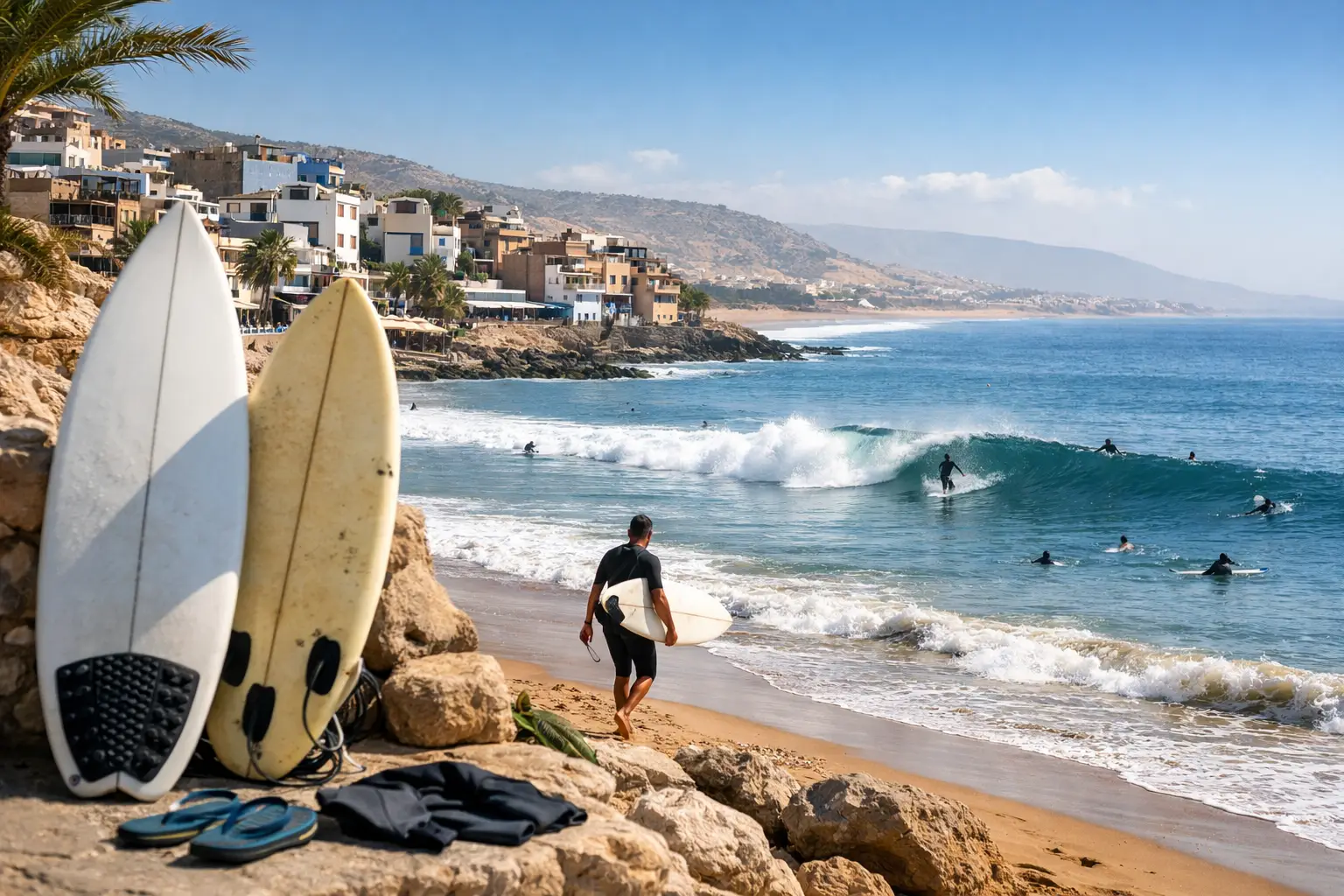
The first look at Anchor Point from the cliff road explains why surfers keep returning to this stretch of Morocco. Long right-hand lines wrap around the point, fishing boats sit below, and Taghazout’s white buildings glow above the Atlantic. This Taghazout surf trip example maps out a relaxed seven-day stay for travelers who want quality surf without turning every hour into a schedule.
The best version of this trip balances water time with the things that make the village and its surrounding coast memorable: late breakfasts, sunset walks, a hammam visit, and a few easy discoveries beyond the lineup. It also leaves room for the reality of surf travel. Wind, tide, swell direction, and your ability level should shape each day more than any itinerary.
Before You Go: Choose the Right Surf Season
Taghazout is a year-round coastal escape, but the surf experience changes significantly by season. From roughly October through March, Atlantic swells are more regular and the region attracts intermediate and advanced surfers chasing powerful point breaks. Beginners can still find lessons and sheltered peaks, although a large swell can make the better-known breaks unsuitable for a first session.
April through September usually brings warmer weather, lighter crowds outside holiday periods, and smaller waves. That can be a great fit for newer surfers, longboarders, families, and travelers who want surfing to be part of a beach vacation rather than the entire focus. Summer can also bring flat days, so avoid planning a trip around a guarantee of daily surf.
Stay in Taghazout village if you want to walk to cafés, restaurants, rental shops, and the waterfront. Tamraght, a few minutes south, offers another popular base with a more spread-out feel and easy access to several beach breaks. Travelers who prefer a larger city, more dining choice, and a broader range of services can stay in Agadir and make the drive up the coast.
A Taghazout Surf Trip Example: The First Three Days
Day 1: Arrive, settle in, and watch the ocean
Agadir Al Massira Airport is the usual arrival point, with Taghazout generally around 45 to 60 minutes away by road depending on traffic and stops. Arrange transport in advance when possible, or agree on the fare before leaving with a taxi driver. Keep some Moroccan dirhams for small purchases, tips, and local transport.
Once you have checked in, do not rush straight into the water after a flight. Walk the village, find the beach access, and watch the break from shore. You will learn more in 20 minutes of watching the sets, currents, and local surfers than by paddling out tired and guessing. End the evening with grilled fish, a tagine, or a simple Moroccan salad, then get an early night.
Day 2: Start with a guided session
Make the first surf session a guided one, especially if this is your first time in the area. A local instructor or surf guide can match the conditions to your level and help you understand which breaks are working. For beginners, a sandy-bottom beach break such as Crocodile Beach or Banana Beach is often a better starting point than the famous rocky points.
Renting a soft-top board and wetsuit is straightforward around Taghazout, but check the board’s condition before taking it away. Ask about leash, wax, rental length, and whether damage charges apply. After your session, take a slow lunch rather than stacking another activity on top of it. Surfing in strong sun and saltwater catches up with people quickly.
Day 3: Find your rhythm at the right break
Use your second surf day to repeat what worked. Beginners improve faster by returning to a manageable wave than by chasing a famous name every morning. Intermediates may look toward breaks such as Banana Point when conditions are friendly, while confident surfers can assess the area’s point breaks with local advice.
The trade-off is simple: the more celebrated the wave, the more crowded and technical it may be. Anchor Point, Killer Point, and Boilers have earned their reputations, but they are not casual practice zones when the swell is solid. Respect the lineup, wait your turn, and do not paddle straight into the peak. A friendly attitude goes a long way in a small surf community.
Days 4 and 5: Add a Little More Coastline
By the fourth day, let the forecast guide you. If the early morning is clean, surf first and save sightseeing for later. If the wind is up or the tide is wrong for your preferred break, use the window for a local outing instead of forcing a poor session.
A trip to Paradise Valley can add a change of scenery, with palm-lined landscapes and natural pools when water levels allow. Conditions vary by season, and the valley can be much drier than travelers expect during hot months. Bring sturdy shoes, water, and sun protection rather than treating it like a quick walk from the beach.
For a coastal alternative, head north toward Imsouane. It is known for its long, gentle right-hand wave when the swell lines up and makes a memorable day for longboarders and progressing surfers. It is a longer outing than the breaks around Taghazout, so start early and keep expectations flexible. Surf conditions can make the journey brilliant or merely scenic.
Day five is a good time for a rest session: a beach walk, yoga class, café stop, or traditional hammam. Rest is not lost surf time. Shoulders, lower back, and paddling stamina often feel the effect after several consecutive days in the water, particularly for visitors used to shorter sessions at home.
Days 6 and 7: Surf With More Confidence, Then Slow Down
By now, you should understand the local tempo. Get up early for your final full surf day, check the ocean before breakfast, and choose the spot that fits the conditions rather than your original wish list. A smaller, clean wave where you catch plenty of rides is usually more satisfying than battling a crowded, overhead point break for one uncertain wave.
Use the afternoon to explore Taghazout at ground level. Browse small shops, pause for mint tea, and find a terrace for sunset. The village is compact, but its appeal is not about ticking off attractions. It is about the rhythm between the surf check, the call to prayer, the ocean breeze, and the easy conversation that develops after a few days in the same cafés and lineups.
On departure day, keep the plan light. If your flight timing allows, fit in a final beach walk rather than a rushed surf session. Pack your wetsuit separately if it is still damp, confirm transportation the day before, and leave extra time for the drive back toward Agadir.
What to Budget for a Taghazout Surf Week
Your costs depend most on accommodation style, transport, and whether you book individual lessons or a complete surf package. Taghazout can work well for budget travelers using guesthouses and shared rooms, while boutique stays and ocean-view retreats raise the daily spend quickly.
Plan for lodging, airport transfers or a rental car, food, surfboard rental, lessons or guiding, and a little cash for incidental purchases. Eating at local spots can be very affordable, while café culture, imported products, and organized excursions can add up. Travelers who want several guided sessions may find a surf-focused stay convenient, while independent surfers often prefer the freedom to select rental gear and breaks day by day.
Small Details That Make the Trip Better
Bring a reusable water bottle, reef-safe sunscreen, a light layer for breezy evenings, and a secure bag for valuables at the beach. A 3/2 wetsuit is common in the cooler months, though personal comfort varies. Ask locally before packing a thinner suit for winter sessions.
Dress respectfully away from the beach, particularly when walking through town or visiting inland areas. Learn a few greetings in Arabic or French, be patient when plans move at a different pace, and always ask before photographing people. These small choices make interactions warmer and travel simpler.
For local ideas beyond the surf forecast, Visit Agadir can help you spot nearby places to eat, stay, and explore across the wider coastal region. The best trip is rarely the one with the most sessions on paper. It is the one where you leave Taghazout with salty hair, tired arms, and enough unhurried moments to want to come back.
Keywords: Taghazout surf trip







Own a business in Agadir?
Get discovered by thousands of visitors.