Moroccan Hospitality Explained: Heartfelt Traditions Travelers Love
Discover the deep cultural roots of Moroccan hospitality and how to experience authentic diyafa rituals in Agadir and beyond. Your essential traveler's guide.
Moroccan hospitality isn’t a courtesy—it’s a calling. When a stranger offers you mint tea, a seat at a family table, or a handshake that lingers just a little longer than you’d expect, you’re not experiencing politeness. You’re being welcomed into one of the world’s most deeply rooted cultural systems, one that has shaped communities across the Souss-Massa region for centuries. Whether you’re exploring Agadir’s sun-drenched medina, browsing a Tiznit silver souk, or sharing bread in a Taroudant riad, understanding what drives this warmth will transform every encounter from a pleasant moment into something genuinely unforgettable.
Table of Contents
- The meaning and roots of Moroccan hospitality
- Signature rituals and everyday practices
- Experiencing genuine hospitality in Agadir and beyond
- Nuances and common misconceptions: What travelers need to know
- Why Moroccan hospitality’s magic depends on you
- Discover more of Agadir’s hospitality culture with us
- Frequently asked questions
Key Takeaways
| Point | Details |
|---|---|
| Sacred tradition | Moroccan hospitality is considered a sacred duty based on cultural and religious values. |
| Signature rituals | Guests are welcomed with traditional greetings, mint tea, and abundant communal meals. |
| Genuine versus staged | Authenticity is strongest in rural or less-touristic areas where gestures come without expectation. |
| Traveler participation | Respectful engagement and openness are key to experiencing the truest Moroccan hospitality. |
The meaning and roots of Moroccan hospitality
Most travelers arrive in Morocco expecting friendliness. What they find is something far more profound. Moroccan hospitality (diyafa) is a sacred cultural obligation rooted in Berber, Arab, Islamic, and historical nomadic traditions, layered across thousands of years into something that feels less like custom and more like instinct. The Berber (Amazigh) communities of the Atlas Mountains and the Souss valley practiced radical generosity long before Islam arrived in the region. For nomadic peoples, offering shelter and food to a stranger wasn’t optional—it was survival ethics, a social contract that protected entire communities on the move. When Islam took hold across North Africa, it reinforced what was already culturally embedded. The Quran instructs believers to honor guests, and the Prophet Muhammad famously said that anyone who believes in God should honor their guest. That spiritual weight is still very much present today.
“In a Moroccan home, a guest is seen not as an obligation but as a blessing. The host gains spiritual merit by giving generously, expecting nothing in return.”
This is the element that surprises most travelers experiencing Moroccan hospitality for the first time: there is no expectation of reciprocity. Generosity is its own reward in the Moroccan worldview. The more a host gives, the more honor they carry. Declining too quickly can feel, to the host, like a small rejection. The core values that shape diyafa include:
- Warmth (hanan): Physical and emotional closeness is welcomed, not guarded.
- Generosity (karam): Abundance is displayed through food, space, and time.
- Honoring the guest: The best seat, the first serving, the finest tea—always for the visitor.
- Patience: Hosts rarely rush guests. Time is a gift they offer freely.
- No conditions: True diyafa asks nothing back. Gratitude is enough.
What makes this cultural foundation so striking is that it transcends social class. A modest family in a rural Souss village and a wealthy merchant family in an Agadir riad both operate by the same unwritten code. Understanding that code changes the texture of your entire trip.
Signature rituals and everyday practices
Understanding the values, what do these customs look like day-to-day for a guest in Morocco? The answer is rich, sensory, and layered with meaning. Core rituals include immediate welcoming with phrases like “Marhba bik!” (Welcome!), mint tea, communal meals, and insistence on guests staying longer. Each of these isn’t just a gesture—it’s a language. Here’s a quick comparison of the most common hospitality rituals and what they signal:
| Ritual | What it signals | Traveler’s response |
|---|---|---|
| “Marhba bik!” greeting | Genuine welcome, you are seen | Smile, nod, or reply “Shukran” |
| Mint tea, poured with height | Respect and generosity | Accept graciously, even a small sip |
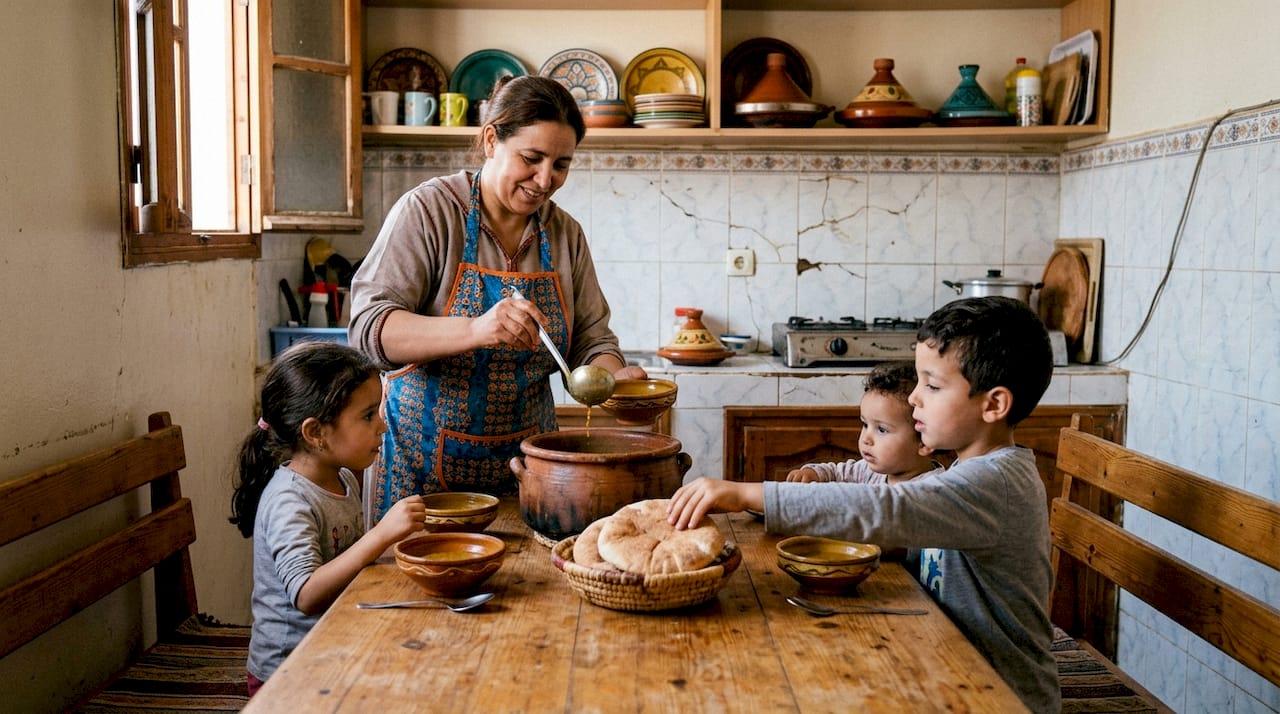
| Communal tagine or couscous | Belonging, family status | Eat with your right hand, compliment the cook |
| Insistence you stay longer | You are valued, not a burden | A polite but warm decline is acceptable |
| Offering leftover food to take | The host wants to keep giving | Accept with thanks, never refuse bluntly |
The mint tea ceremony—known as atay—deserves special attention. Tea is brewed strong, sweetened generously, and poured from a height to create a frothy top that signals care and skill. Refusing the first glass is a social misstep. Accepting and complimenting the flavor is a small act of connection that opens entire conversations. 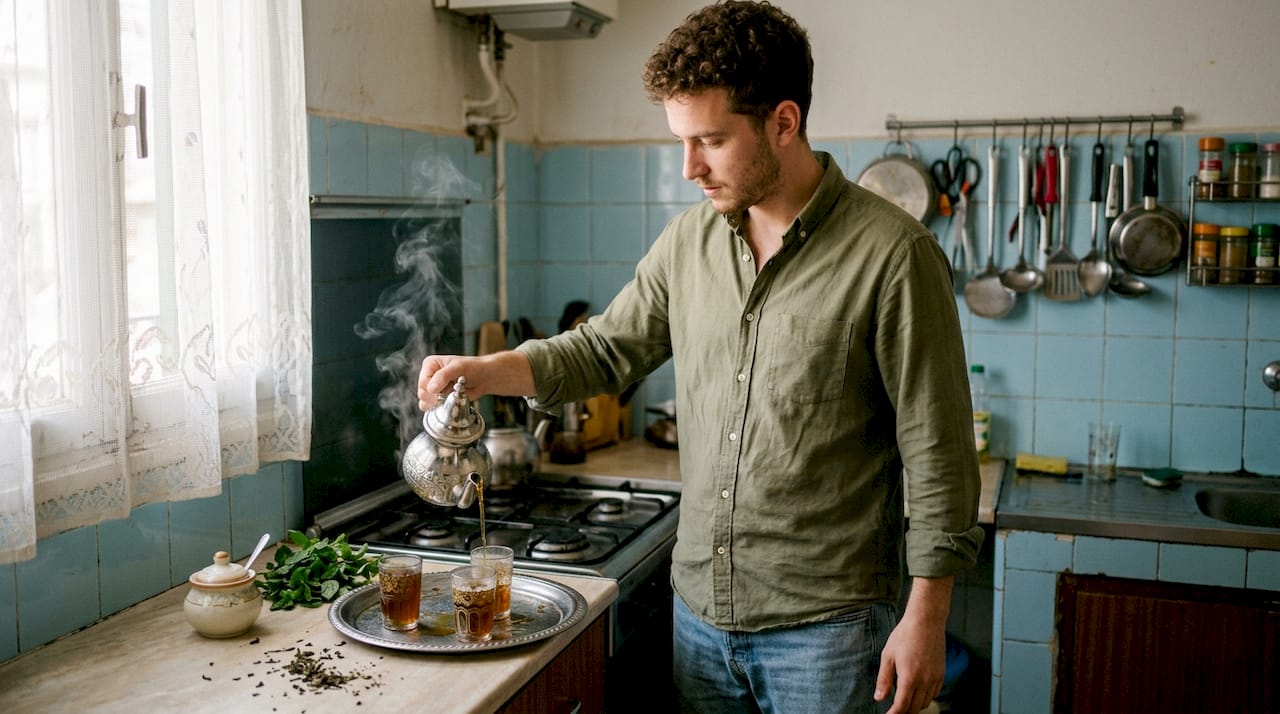 Meals are equally charged with meaning. Most traditional Moroccan meals are shared from a single large dish placed at the center of a low table or floor cloth. You eat from the section directly in front of you, always with your right hand, and you compliment the host’s cooking openly. Pair that knowledge with an appreciation for Agadir’s local cuisine, and you’ll arrive at the table genuinely ready to engage. The numbered sequence of a traditional Moroccan hosting experience typically unfolds like this:
- Arrival greeting with handshakes and verbal welcomes.
- Hand washing before the meal (a bowl and pitcher are brought to you).
- Communal eating from shared dishes.
- Fresh fruit or pastries after the main course.
- Mint tea, served at least two or three rounds.
- Warm insistence that you stay, relax, and return soon.
Pro Tip: Learn even two or three words of Darija (Moroccan Arabic) before your trip. Saying “Barak Allahu fik” (may God bless you) after a meal will earn you a reaction that no guidebook can fully describe. Read more about Moroccan entertaining customs to prepare yourself before you arrive.
Experiencing genuine hospitality in Agadir and beyond
Once you recognize the rituals, how can you seek out real Moroccan hospitality on your trip? In Agadir, you can experience hospitality in souks, riads, family meals, and Amazigh festivals, blending the city’s modern coastal energy with deeply preserved Berber traditions. Agadir is unique—it’s one of Morocco’s most visited cities, yet authentic cultural experiences are absolutely within reach if you know where to look. Here’s a practical guide to where and how hospitality shows up across different settings:
| Setting | Authenticity level | What to expect |
|---|---|---|
| Rural villages near Taroudant | Very high | Home meals, overnight stays, full diyafa |
| Agadir old quarter (Talborjt) | High | Traditional tea shops, local vendors, warm greetings |
| Agadir main tourist zone | Mixed | Friendly but often commercial; read the context |
| Riads and family guesthouses | High | Personal hosting, homemade food, cultural stories |
| Amazigh festivals and markets | Very high | Community-level celebration, open invitations |
The hidden gems in Agadir that most tourists miss are often the small neighborhood cafes and family-run argan oil cooperatives where a simple visit turns into an hour-long conversation over sweet tea. These aren’t tourist attractions—they’re living rooms with open doors. Venturing beyond Agadir amplifies everything. Consider the magical day trips from Agadir to Taroudant, where the medina moves at a slower, more intimate pace, or head toward Tiznit for a souk experience where vendors treat browsers like long-lost neighbors. If you have the appetite for something more dramatic, Agadir desert tours often include overnight stays with nomadic-inspired hosting that will genuinely reshape your understanding of generosity. The most honest advice from seasoned Morocco travelers is consistent: get off the main boulevard. The Agadir travel guide worth following is the one that takes you into neighborhoods, not just attractions.
- Stay in a riad or family guesthouse, not just a hotel.
- Visit the souk early morning when vendors are relaxed and sales pressure is low.
- Accept an invitation to tea even when you’re not planning to buy anything.
- Attend a local festival or community event if the timing aligns.
- Ask your host or guide to recommend where their family eats.
Nuances and common misconceptions: What travelers need to know
But not every gesture is straightforward—let’s explore the nuances and misconceptions that often trip up travelers. Authenticity is more common in rural areas, while in tourist hubs, hospitality can feel transactional; respect and proper etiquette unlock true warmth. This is the part most travel content glosses over, and it matters. 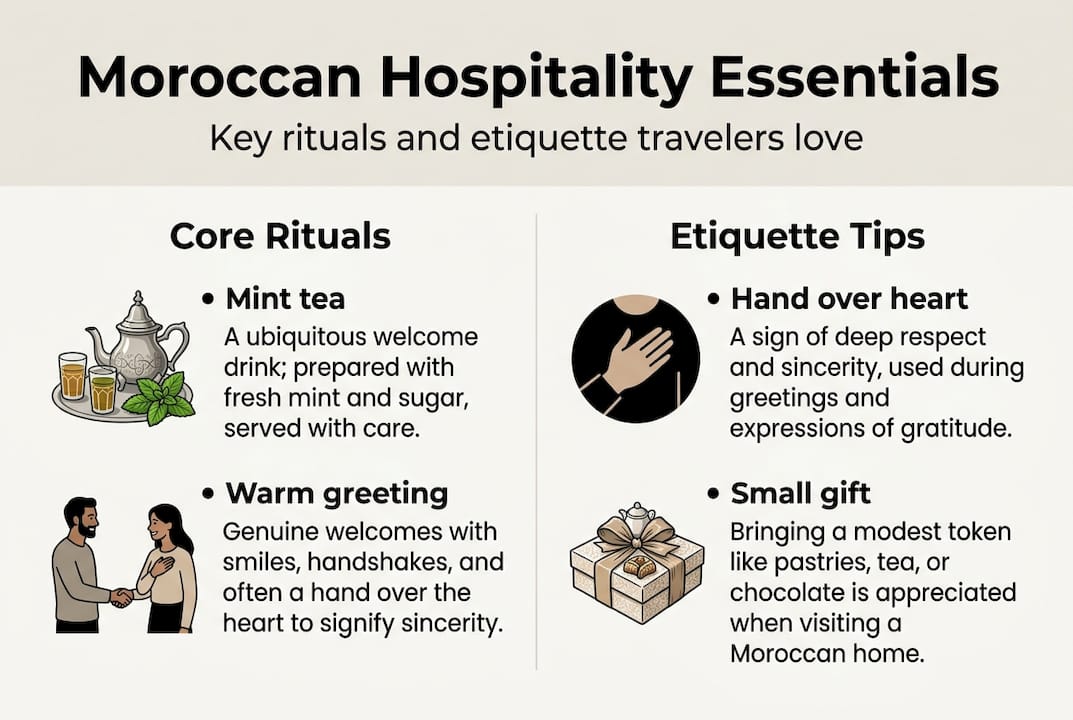 Here’s the reality: in high-traffic tourist zones, some offers of hospitality come with commercial expectations attached. A man who guides you to a shop “for free” may expect a commission from the vendor. A tea invitation in a carpet emporium often precedes a sales pitch. This doesn’t make those moments insincere—Moroccan salesmanship is itself an art form, and bargaining is a cherished local hospitality insight shared across communities. But you should enter with clear eyes. The key differences between genuine and staged hospitality:
- Location matters. Warmth in a family home or neighborhood cafe is almost always genuine.
- Context matters. Tea in a shop is a preamble to commerce; tea in someone’s living room is a gift.
- Pressure matters. Genuine hosts never make you feel guilty for leaving.
- Reciprocity expectations. Authentic diyafa asks nothing. Staged hospitality often creates an implied debt.
Etiquette is your best tool for navigating this. Dress modestly, particularly when visiting older neighborhoods, religious sites, or attending festivals. Covering shoulders and knees is a baseline sign of respect that opens more doors than any phrase book. During Ramadan, public eating and drinking during daylight hours are culturally sensitive; read the room and follow the local lead. Pro Tip: When visiting a souk like the one in Tiznit’s silver market, greet every vendor with “As-salamu alaykum” before any transaction begins. This one greeting signals cultural awareness and immediately shifts the dynamic from tourist to honored guest. Refusing an offer doesn’t have to be rude. A gentle hand-to-heart gesture while saying “La, shukran” (No, thank you) is universally understood and respected. The goal is always to preserve the other person’s dignity while protecting your own boundaries.
Why Moroccan hospitality’s magic depends on you
Here’s the perspective most travel guides won’t offer: Moroccan hospitality is not a spectacle you observe—it’s a relationship you help create. The depth of what you experience is largely a reflection of what you bring to the encounter. Visitors who arrive curious, who learn a few words of Darija, who accept a tea with genuine appreciation rather than polite tolerance—they consistently report experiences that feel transformative. Those who stay guarded, check their phones through the tea ceremony, or treat every warm gesture with suspicion tend to leave thinking Morocco was “friendly but a bit pushy.” The difference isn’t Morocco. It’s the traveler. True diyafa requires mutual engagement; the boundaries between guest and host blur through genuine participation, and that’s when the real Morocco becomes visible. A few simple actions—accepting an invitation, learning someone’s name, complimenting a meal with real feeling—turn a cultural encounter into something both parties carry forward. This is especially true in less touristed areas around Agadir. In those spaces, diyafa is still a living, breathing tradition, not a performance for visitors. By engaging respectfully and openly, you’re not just a traveler receiving hospitality. You’re a participant helping to sustain it.
Discover more of Agadir’s hospitality culture with us
Ready to step into Morocco’s culture yourself? The knowledge in this guide is a starting point, but the real texture of Moroccan hospitality only reveals itself when you’re standing in a souk, sitting in a riad courtyard, or watching the golden light fall over the Souss plains on a day trip you’ll describe for years.  At Visit Agadir, we’ve built a resource that helps you plan every layer of that experience. Use our Agadir business directory to find authentic riads, family restaurants, and cultural shops that locals actually recommend. Browse our curated Agadir day trips to discover immersive routes that take you beyond the resort zone into the beating heart of Souss-Massa. The warmth is waiting—let us help you find it.
Frequently asked questions
How do Moroccans typically greet guests?
Moroccans welcome guests warmly with phrases like “Marhba bik!” and almost always follow with an offer of mint tea, which signals genuine respect and a desire to make you feel at home.
Is Moroccan hospitality different in cities like Agadir versus villages?
Hospitality in rural areas tends to be more personal and deeply rooted in tradition, while in busier tourist zones like central Agadir it can occasionally carry commercial overtones—though genuine warmth is always within reach if you look for it.
What should travelers do to show respect for Moroccan hospitality?
Dress modestly, greet hosts with a polite phrase, bring a small gift like pastries or fruit when visiting a home, and participate in local rituals like tea drinking rather than declining out of awkwardness.
Why is tea such an important part of Moroccan hospitality?
Mint tea poured from height creates froth as a symbol of care and generosity; serving multiple rounds of sweet tea is one of the most visible ways a Moroccan host communicates that you are valued and welcomed.
Recommended
- Savoring Agadir: A Culinary Journey Through Traditional Moroccan Cuisine - Visit Agadir
- Experience Unforgettable Agadir Desert Tours Today!
- Moroccan Food in Agadir: A Culinary Journey Through the Souss-Massa Flavors - Visit Agadir
- Visit Taroudant: Uncover the Enchanting Moroccan City
- Traditions of the coffee ceremony – Autoryzowany dystrybutor i serwis Jura Wrocław

Timlalin Domes
Hotels & Accommodation

Hilton Taghazout Bay Beach Resort & Spa
Hotels & Accommodation

Generation Cars location voiture Agadir, location voiture Agadir aéroport sans caution, Car rental Agadir
Transport & Car Rental

Centre Dentaire Amzil agadir
Health & Wellness
Own a business in Agadir?
Get discovered by thousands of visitors.