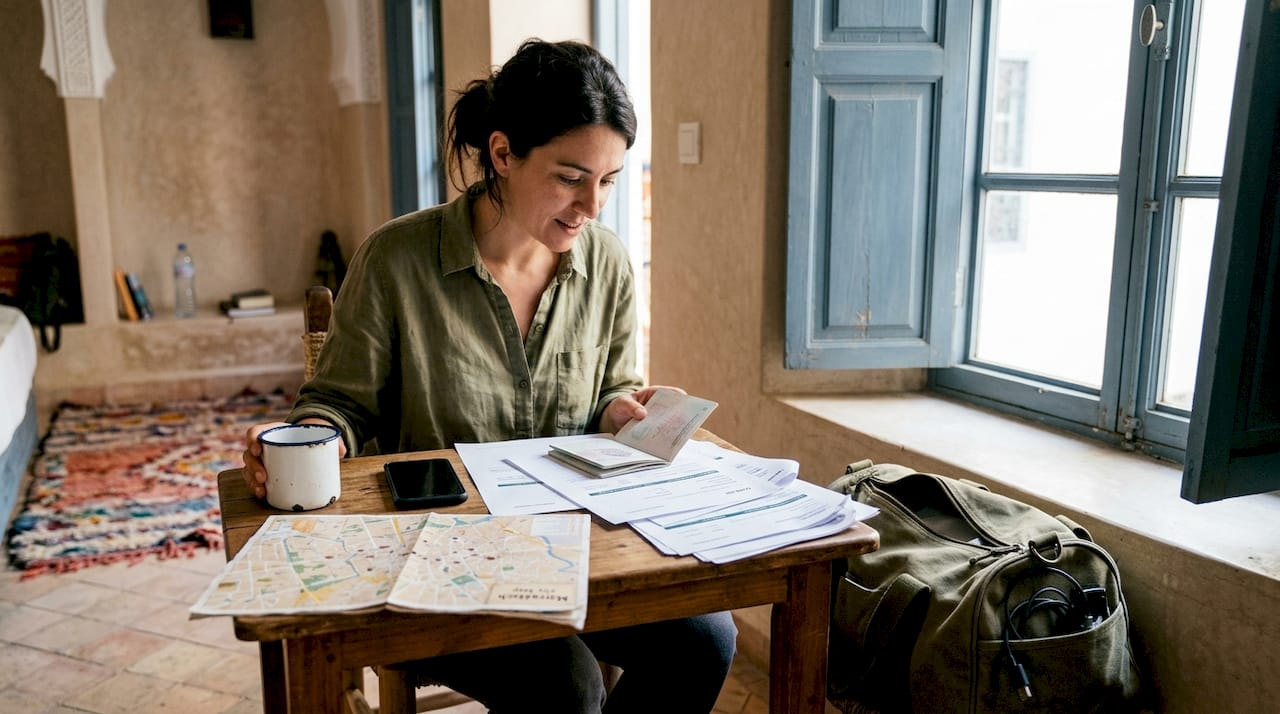
Essaouira travel checklist: essentials and insider tips
Plan your Essaouira trip with this complete checklist covering documents, packing, money, transport, and top experiences for every travel style.
Planning a trip to Essaouira feels exciting until you realize how many moving parts there are. The medina’s winding alleys, the cooling Atlantic breeze rolling off the coast, the vibrant souks and fresh seafood grills — it all sounds effortless until you arrive underprepared. Whether you’re a solo traveler chasing the surf, a family looking for cultural richness, or an adventure seeker ready to explore Morocco’s windswept gem, getting the details right before you leave makes all the difference. This checklist covers everything from documents and packing to money, transport, and the experiences that make Essaouira worth visiting — so nothing slips through the cracks.
Table of Contents
- Travel documents and essential paperwork
- Packing checklist: What to bring for Essaouira
- Local essentials: Money, transport, and communication
- Experiences and activities: Don’t miss these in Essaouira
- Why most Essaouira checklists miss the mark
- Discover even more travel inspiration with Visit Agadir
- Frequently asked questions
Key Takeaways
| Point | Details |
|---|---|
| Document essentials | Always double-check your passport, travel insurance, and entry paperwork before heading to Essaouira. |
| Packing smart | Pack layers, windproof clothing, and health basics to stay comfortable and safe throughout your trip. |
| Local logistics | Master local money, transport, and connectivity tips to make your Essaouira adventure hassle-free. |
| Unmissable experiences | Prioritize top activities like exploring the medina and enjoying fresh seafood to maximize your visit. |
Travel documents and essential paperwork
Now that you’ve seen why preparation matters, let’s start with the basics: the documents every Essaouira traveler must have. Getting this right before you board means no surprises at the border and no scrambling at the hotel desk.
Your passport must be valid for at least six months beyond your planned departure date from Morocco. Many travelers overlook this and face last-minute renewal panic. Citizens from the US, EU, UK, Canada, and Australia generally do not need a visa for stays under 90 days, but always verify current rules through your country’s foreign affairs office before traveling.
Travel insurance is not optional — it’s your safety net. Look for a policy that covers medical evacuation, trip cancellation, and lost luggage. Morocco’s healthcare infrastructure in smaller cities can be limited, so having solid coverage gives you real peace of mind.
Health documents have become increasingly relevant for international travel. While Morocco lifted most COVID-related entry requirements, it’s smart to carry vaccination records, particularly for yellow fever if you’re arriving from an affected country. Check the latest requirements at least two weeks before departure.
Here’s what to have ready in both digital and physical form:
- Valid passport (6+ months validity beyond return date)
- Printed and digital copies of your travel insurance policy
- Vaccination records or health certificates if applicable
- Hotel booking confirmations and contact details
- Emergency contact list including your country’s embassy in Rabat
- Entry card (provided on arrival at Moroccan airports or borders)
- Copies of your flight itinerary
Morocco requires hotel registration upon check-in, so your accommodation will ask for your passport. This is standard practice and nothing to worry about, but having a photocopy ready speeds things up considerably. A travel documents checklist can help you stay organized and avoid last-minute oversights.
Pro Tip: Store digital copies of every document in a cloud folder you can access offline. Losing your passport abroad is stressful enough — losing all your backup copies too is a disaster.
Packing checklist: What to bring for Essaouira
With your paperwork secured, next is packing the right gear for Essaouira’s unique environment and experiences. This city has a personality all its own, and your suitcase should reflect that.
Essaouira sits on Morocco’s Atlantic coast, which means wind. Lots of it. Even in summer, evenings cool down fast, and the midday breeze can cut through a light shirt. Layering is your best strategy: a breathable base layer, a light mid-layer, and a windproof outer shell covers most weather scenarios year-round.
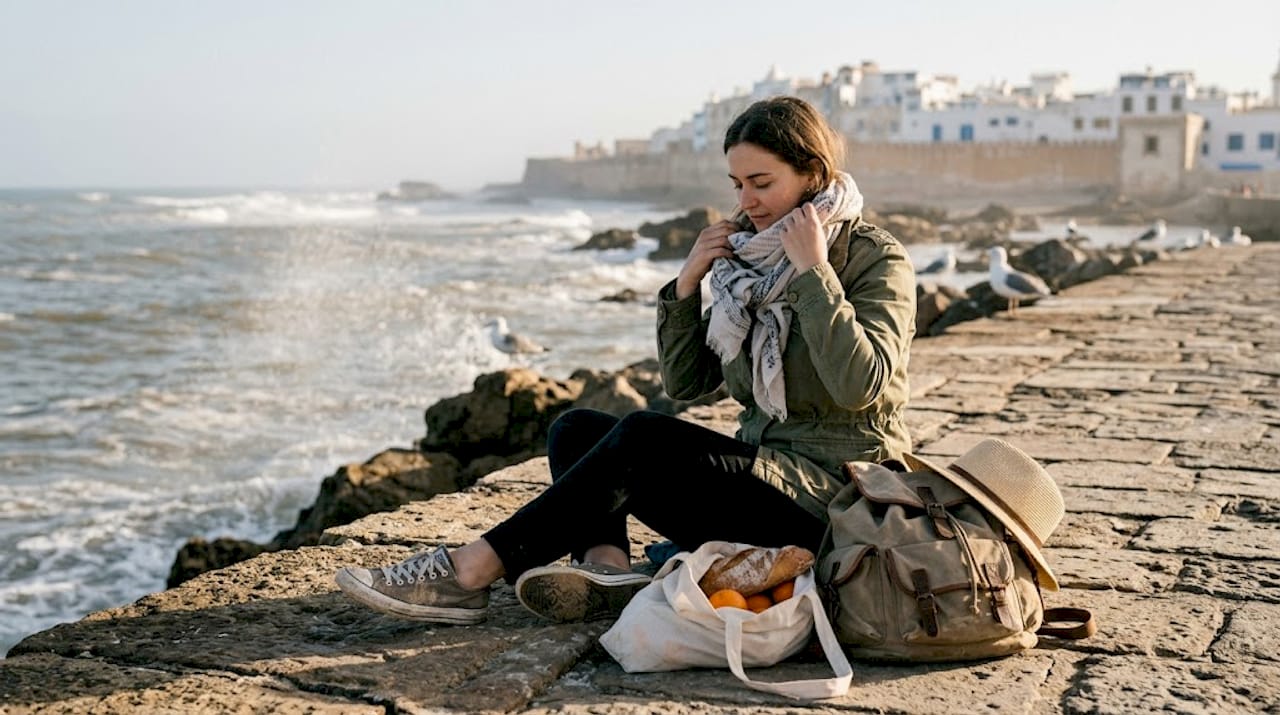
Footwear deserves real thought. The medina’s cobblestones are uneven and beautiful, while the beach stretches wide and sandy. Bring one pair of comfortable walking shoes with grip, and one pair of sandals or slip-ons for the beach and casual evenings. Avoid brand-new shoes — blisters on cobblestones are not a good souvenir.
A practical traveler’s checklist for Essaouira should also include health and safety basics:
- High-SPF sunscreen (the Atlantic sun is deceptively strong)
- Lip balm with UV protection
- Antihistamines and basic pain relief
- Rehydration sachets for hot days
- A small first aid kit
- Hand sanitizer and wet wipes
- Prescription medications with original packaging
For connectivity and power, Morocco uses Type C and E plugs at 220V. Bring a universal adapter and a power bank, especially if you plan to navigate with your phone. Download offline maps before you arrive — Google Maps works well offline for Essaouira’s medina.
“Essaouira rewards travelers who pack light and stay curious. The best discoveries happen when you’re not weighed down.”
What NOT to pack is just as important. Avoid revealing clothing for medina visits out of respect for local culture. Tight shorts and sleeveless tops attract unwanted attention in the old town. A light scarf doubles as a cover-up and a windbreak. If you’re planning a longer Morocco trip, check out Agadir itinerary essentials and must-visit Agadir sites to coordinate your packing across destinations.
Pro Tip: Pack a reusable tote bag. Essaouira’s markets overflow with fresh produce, spices, and handmade goods, and plastic bags are increasingly restricted in Morocco.
Local essentials: Money, transport, and communication
You’ve packed smart; now make sure you can navigate Essaouira efficiently with these money, transport, and connectivity essentials.
Morocco’s currency is the Moroccan Dirham (MAD). Cash is king in Essaouira, especially in the medina, at small restaurants, and for transport. ATMs are available in the city center and generally reliable, but carry enough cash for a full day since machines can run dry during busy periods. Currency exchange offices offer competitive rates; avoid exchanging money at airports where rates are typically poor.
| Payment method | Best for | Limitations |
|---|---|---|
| Cash (MAD) | Medina shops, taxis, street food | Must carry enough; security risk |
| Credit/debit card | Hotels, larger restaurants | Not accepted everywhere |
| ATM withdrawal | Convenience, fair rates | Fees apply; machines can be empty |
| Airport exchange | Emergency only | Poor exchange rates |
For getting around, Essaouira is largely walkable within the medina. Grand taxis (shared long-distance taxis) connect Essaouira to Agadir and Marrakech at affordable rates. Within the city, petit taxis are metered and cheap. Car rentals are available if you want to explore the surrounding countryside, including Agadir’s souk culture and coastal roads.
For communication, buying a local SIM card from Maroc Telecom or Orange Morocco is the most cost-effective option. Data plans are affordable and widely available at phone shops in the city center. Most hotels and riads offer Wi-Fi, though speeds vary. Always save emergency contacts including the local police (19), ambulance (15), and your country’s embassy.
Key safety tips for tourists, aligned with essential safety advice for visitors:
- Keep valuables in a money belt or hidden pouch
- Avoid displaying expensive cameras or jewelry in crowded areas
- Use licensed taxis and agree on the fare before getting in
- Stay aware of your surroundings in busy souks
- Trust your instincts if a situation feels uncomfortable
If you want to explore beyond Essaouira, check out top Agadir activities for ideas that pair well with your coastal itinerary.
Experiences and activities: Don’t miss these in Essaouira
Before wrapping up your logistics, don’t miss the best experiences Essaouira offers — no checklist is complete without them.
Essaouira’s soul lives in its medina, a UNESCO World Heritage Site that breathes history and color at every turn. The blue and white walls, the smell of argan oil and spices, the sound of Gnawa music drifting from a doorway — these are the moments that stay with you. The ramparts overlooking the Atlantic offer some of the most dramatic views in all of Morocco.
Here are the top experiences to prioritize, drawn from the Essaouira day trip guide:
- Walk the medina and explore the artisan workshops
- Visit the historic Skala de la Ville sea fortress
- Watch the fishing boats return to the port at sunset
- Try fresh grilled fish at the port-side market stalls
- Take a surfing or windsurfing lesson on Essaouira Beach
- Join a camel ride along the Atlantic shoreline
- Attend a live Gnawa music performance in Moulay Hassan Square
- Browse the woodwork and thuya crafts in the souk
| Experience type | Recommended duration | Best for |
|---|---|---|
| Medina exploration | 2 to 3 hours | Culture lovers, photographers |
| Surfing or windsurfing | Half day | Adventure seekers |
| Port and seafood market | 1 to 2 hours | Food enthusiasts |
| Camel ride on beach | 1 hour | Families, first-time visitors |
| Gnawa music evening | 2 hours | Music and culture fans |
| Ramparts walk | 45 minutes | History buffs, sunset chasers |
If you’re combining Essaouira with a wider southern Morocco trip, Agadir day trips and the Agadir surfing guide give you a fuller picture of what the Atlantic coast offers. For a different kind of coastal adventure, Tamraght’s attractions are well worth adding to your itinerary.
Why most Essaouira checklists miss the mark
Here’s the honest truth: most travel checklists for Essaouira are built around fear rather than experience. They tell you to bring sunscreen and copy your passport — useful, yes, but they rarely tell you that the wind in Essaouira is so consistent that it can ruin an entire beach afternoon if you’re not dressed for it. They don’t mention that the medina’s “tourist price” and “local price” gap is real, and knowing a few words of Darija (Moroccan Arabic) can literally halve what you pay at a souk stall.
Most checklists also ignore the off-season magic. Essaouira in November or February is quieter, more authentic, and surprisingly warm. You get the medina to yourself, guesthouse prices drop, and locals have time to actually talk to you. That’s a richer experience than peak-season crowds allow.
The best approach is to treat your checklist as a living document, not a static list. Customize it based on your travel style, trip length, and the experiences you’re genuinely excited about. A short weekend visit calls for a tighter, more curated list than a two-week cultural immersion. For deeper Essaouira destination advice, think beyond the standard tips and lean into what makes this city genuinely different.
Discover even more travel inspiration with Visit Agadir
With your Essaouira checklist complete, here’s how to keep your travel planning going strong.
Essaouira is just one jewel in Morocco’s Atlantic crown, and Visit Agadir is your guide to the whole coastline. Whether you’re mapping out day trips from Agadir, exploring the history of Agadir to understand the region’s resilient spirit, or looking for the best beaches and restaurants in the Agadir holiday guide, we’ve got the resources to help you plan with confidence.

Every trip to this region is a chance to experience something genuinely rare — golden light on ancient walls, the smell of the Atlantic at dusk, the warmth of Moroccan hospitality. Let Visit Agadir be the planning partner that helps you make the most of every moment.
Frequently asked questions
What is the best time of year to visit Essaouira?
Essaouira is pleasant year-round, but late spring (April to June) and early fall (September to October) offer the most comfortable weather with fewer crowds and moderate winds.
Are there any health precautions I should take for Essaouira?
Bring basic health supplies including rehydration sachets and pain relief, and review vaccination requirements for Morocco well before your departure date.
Is it easy to get around Essaouira without speaking French or Arabic?
Many locals in tourist areas speak English, but learning a few basic phrases in French or Darija goes a long way with taxi drivers, market vendors, and smaller guesthouses.
What are the top recommended experiences in Essaouira for first-time visitors?
Explore the UNESCO-listed medina, visit the port at sunset, and try fresh grilled fish at the harbor market — these three experiences alone capture the best of Essaouira for any first-time visitor.
Recommended
- Essaouira Day Trip Guide From Agadir - Visit Agadir
- Is Essaouira Worth It? - Visit Agadir
- Navigating Agadir Safely Essential Safety Tips for Tourists - Visit Agadir
- Magical Day Trips from Agadir: Your Ultimate Guide to Southern Morocco (2026) - Visit Agadir
- Packing checklist for long flights: comfort essentials – BOLSTIE TRAVEL PILLOW
- Reisaccessoires checklist 2026: compleet voorbereid op reis
Keywords: essaouira travel checklist essentials insider tips
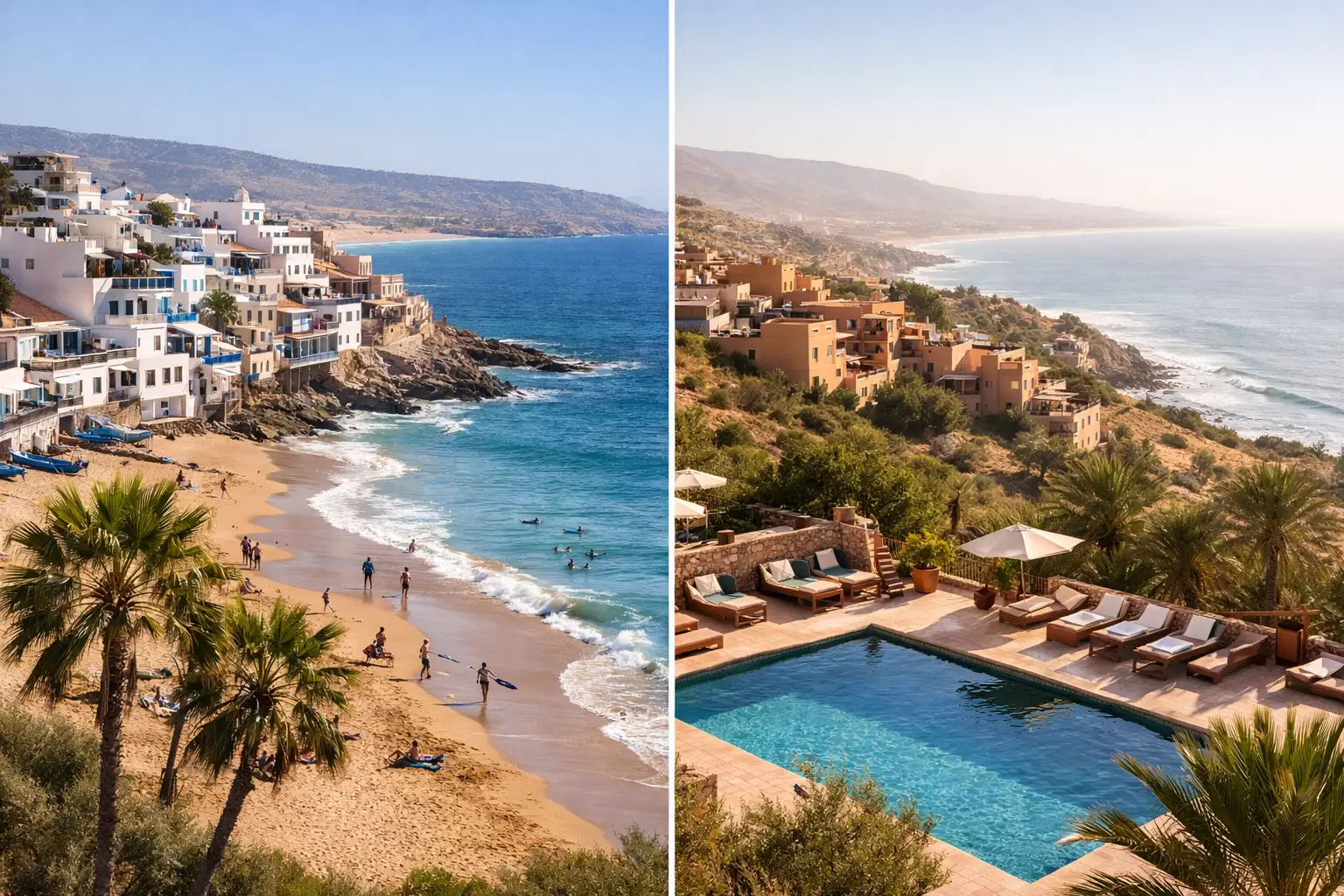


Timlalin Domes
Hotels & Accommodation
Hilton Taghazout Bay Beach Resort & Spa
Hotels & Accommodation

Generation Cars location voiture Agadir, location voiture Agadir aéroport sans caution, Car rental Agadir
Transport & Car Rental

Centre Dentaire Amzil agadir
Health & Wellness
Own a business in Agadir?
Get discovered by thousands of visitors.