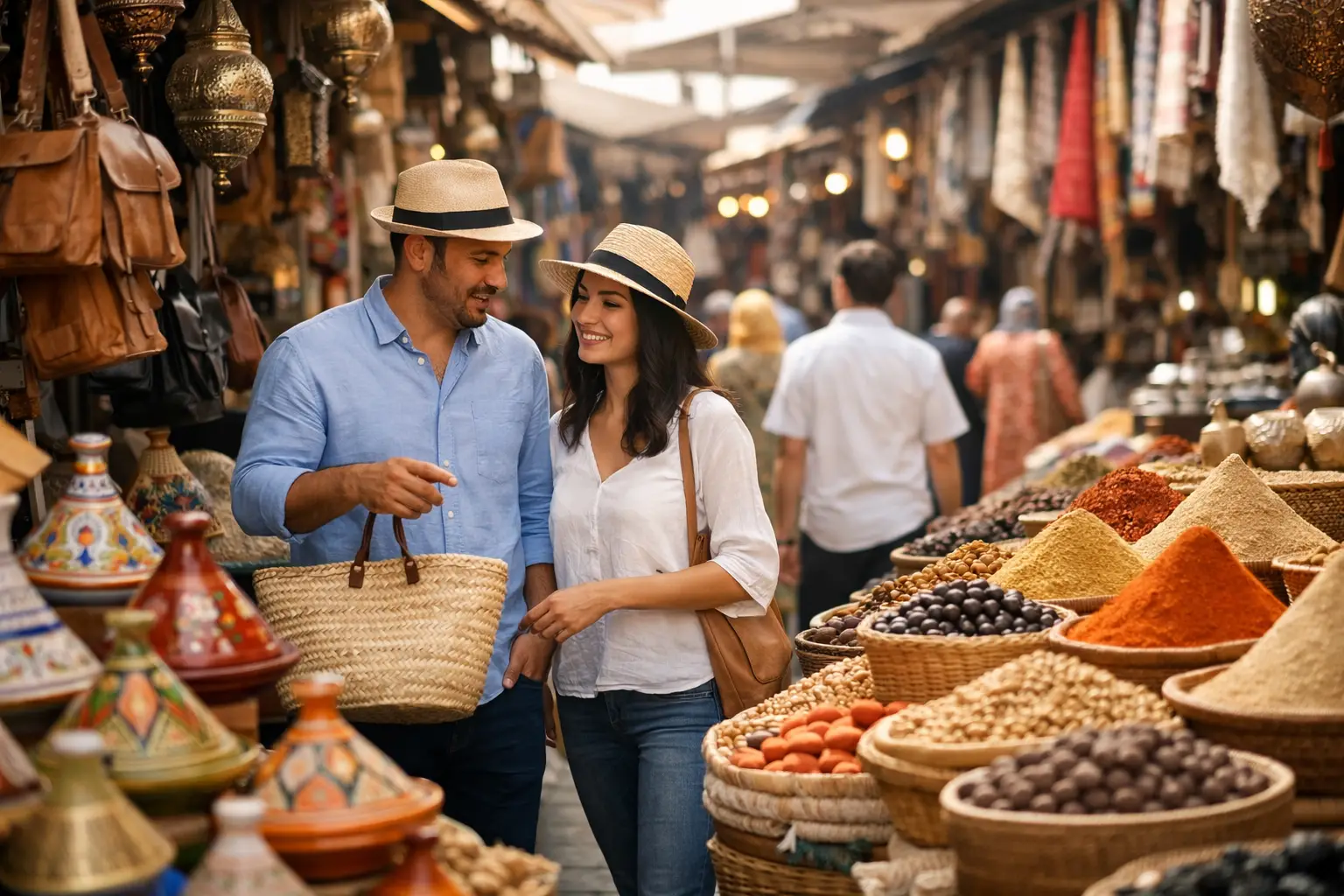
Agadir Souk Shopping Guide for Smart Buyers
Discover the ultimate Agadir Souk shopping guide with expert tips on bargaining, the best products to buy, local markets, and how to shop like a smart buyer.
By the time you reach Souk El Had, Agadir’s biggest market, you’ll hear it before you fully see it - rolling carts, quick bargaining, vendors calling out prices, and the steady movement of locals doing real daily shopping. That is exactly why an agadir souk shopping guide helps. This is not a staged market built only for visitors. It is busy, practical, and full of good finds if you know how to move through it.
For many travelers, the souk becomes one of the most memorable stops in Agadir because it blends everyday city life with the thrill of finding something worth taking home. You can shop for spices, leather bags, pottery, clothing, homeware, argan oil, and fresh produce in the same visit. The trick is not trying to see everything at once. The better approach is to shop with a little strategy and a clear sense of what matters to you.
Why Souk El Had is worth your time
Souk El Had is one of the largest urban markets in Morocco, and that scale changes the experience. Instead of a tiny tourist strip with predictable souvenirs, you get a working market with hundreds of stalls and a mix of locals, residents, and visitors. Some sections feel practical and everyday. Others are more gift-friendly and easier for short-term travelers.
That variety is the real draw. If you want a polished shopping mall experience, this is not it. If you want texture, color, negotiation, and the chance to compare products side by side, the souk delivers. It also gives you a more grounded feel for Agadir than staying only around the beach promenade or marina.
Agadir souk shopping guide: what to buy
Not everything in the market is equally worth packing into your suitcase. Some items are better value, easier to carry, or more connected to the region. If you only have limited time, focus on categories that combine local character with practical quality.
Argan oil is one of the most popular buys, and for good reason. The wider Agadir region is closely associated with argan production, so many visitors come specifically looking for cosmetic oil, soaps, creams, and beauty products. Prices and quality vary, which means this is a category where asking questions matters. If a product seems unusually cheap, it may be diluted or more commercial than artisanal.
Spices are another strong pick, especially if you enjoy cooking and want something easy to carry home. You will see saffron, cumin, paprika, turmeric, ras el hanout, and herbal blends sold in colorful displays. Even if you are not an expert, freshness is usually visible in the color and aroma.
Leather goods can be very tempting in the souk. Bags, slippers, belts, and wallets are widely available, but quality ranges from soft, well-finished pieces to products made mainly for low-cost tourist sales. Take your time, touch the material, inspect the stitching, and compare at more than one stall before you decide.
Ceramics, tagines, tea glasses, and decorative homeware are also classic souk purchases. These items photograph beautifully, but think about weight and breakability before buying too much. A small hand-painted bowl is often a smarter travel buy than a full dinner set.
Textiles are another category worth browsing. Scarves, blankets, table linens, and traditional-inspired clothing can offer good value. Some pieces are made for daily use, while others are produced with visitors in mind. Neither is automatically bad. It depends on whether you want authenticity, affordability, or something easy to gift.
How to shop without feeling overwhelmed
The first mistake many visitors make is trying to make their best purchase in the first ten minutes. Souk El Had is large enough that your first price is rarely your last option. Walk, look, and get a feel for the layout before spending most of your budget.
It helps to decide what kind of shopper you are before you go in. If you love browsing, give yourself time and enjoy the comparison process. If you prefer efficiency, choose one or two target items and head straight toward those sections. Both approaches work, but mixing them usually leads to frustration.
Keep cash with you in small denominations. That makes bargaining smoother and avoids the awkward pause that comes when a seller quotes a price and you only have large bills. Comfortable shoes matter more than people expect. This is a market you walk, not a market you casually skim.
If you are visiting during a hotter part of the day, pace yourself. A tired shopper often overpays simply because they want to finish quickly. Going earlier or later can make the experience more relaxed, especially if you want to compare several stalls.
Understanding prices and bargaining
Bargaining is part of the souk experience, but it does not need to turn into a performance. In most cases, the best approach is calm, friendly, and direct. If you are interested in something, ask for the price, thank the seller, and take a moment before responding. That pause alone often changes the conversation.
Initial prices may be higher for tourists, especially in sections where souvenirs are common. That is normal. The goal is not to force the lowest possible price every time. The goal is to arrive at a fair price that feels good to both sides. If the difference is small and you like the item, it may not be worth stretching the exchange too far.
Comparing similar products at two or three stalls gives you quick market awareness. You will start to notice what is genuinely overpriced and what is simply better quality. This matters because low prices are not always the win they appear to be. A cheaper leather bag that peels after a week is not better value than one that costs a bit more and lasts.
If you are buying multiple items from one seller, that is often the easiest time to ask for a better total price. Sellers are usually more flexible when there is a bigger sale on the table.
A few quality checks that help
This agadir souk shopping guide would not be complete without one practical truth: the market rewards shoppers who look closely. You do not need expert knowledge, but a basic quality check can save you from impulse buys that feel disappointing later.
For argan oil, ask whether it is cosmetic or culinary, and pay attention to packaging and scent. For spices, smell them if possible and look for strong color rather than dusty, faded stock. For leather, inspect seams, zippers, handles, and the inside lining. For pottery, check for chips or hairline cracks, especially if you are carrying it home in luggage.
Textiles deserve a quick touch test. Some fabrics feel appealing from a distance but turn out to be rough or very thin once handled. If something is marketed as handmade, ask a follow-up question. Sometimes that label is accurate, and sometimes it is just part of the sales pitch.
What the market feels like for different travelers
Families often enjoy the souk when they treat it as a short, focused visit rather than an all-day mission. Snacks, simple gifts, and colorful displays make it engaging, but younger kids may lose patience if the trip becomes too long.
Digital nomads and expats usually appreciate the practical side of the market even more than the souvenir side. Household goods, affordable clothing, fresh produce, and daily-use items can make Souk El Had feel useful beyond tourism. It is one of those places that helps you understand how Agadir functions as a lived-in city.
For short-stay visitors, the market works best when paired with a loose shopping plan. Maybe you are looking for gifts, maybe for regional beauty products, maybe just for a strong cup of mint tea and the experience of wandering. All of those are valid. The souk does not need to be conquered to be enjoyed.
When to buy and when to walk away
Some stalls invite a good conversation and a fair deal. Others feel pushy from the first minute. Trust that difference. If you feel rushed, pressured, or confused about quality, keep moving. In a market this large, there is almost always another version of what you just saw.
Walking away is not rude when done politely. In fact, it is often the clearest shopping tool you have. Sometimes a better price follows. Sometimes it does not. Either way, you stay in control of the purchase.
If you find something you genuinely like at a fair price, it is usually worth buying rather than chasing a tiny extra discount across the entire market. The best souk purchases are not only cheap. They are memorable, useful, and tied to the place where you found them.
Souk El Had rewards curiosity more than perfection. Go in with time, ask questions, compare a little, and let the market show you its rhythm. If you shop with patience, Agadir’s souk can give you more than souvenirs - it can give you one of the city’s most real and enjoyable experiences.
Keywords: Agadir Souk shopping guide






Own a business in Agadir?
Get discovered by thousands of visitors.