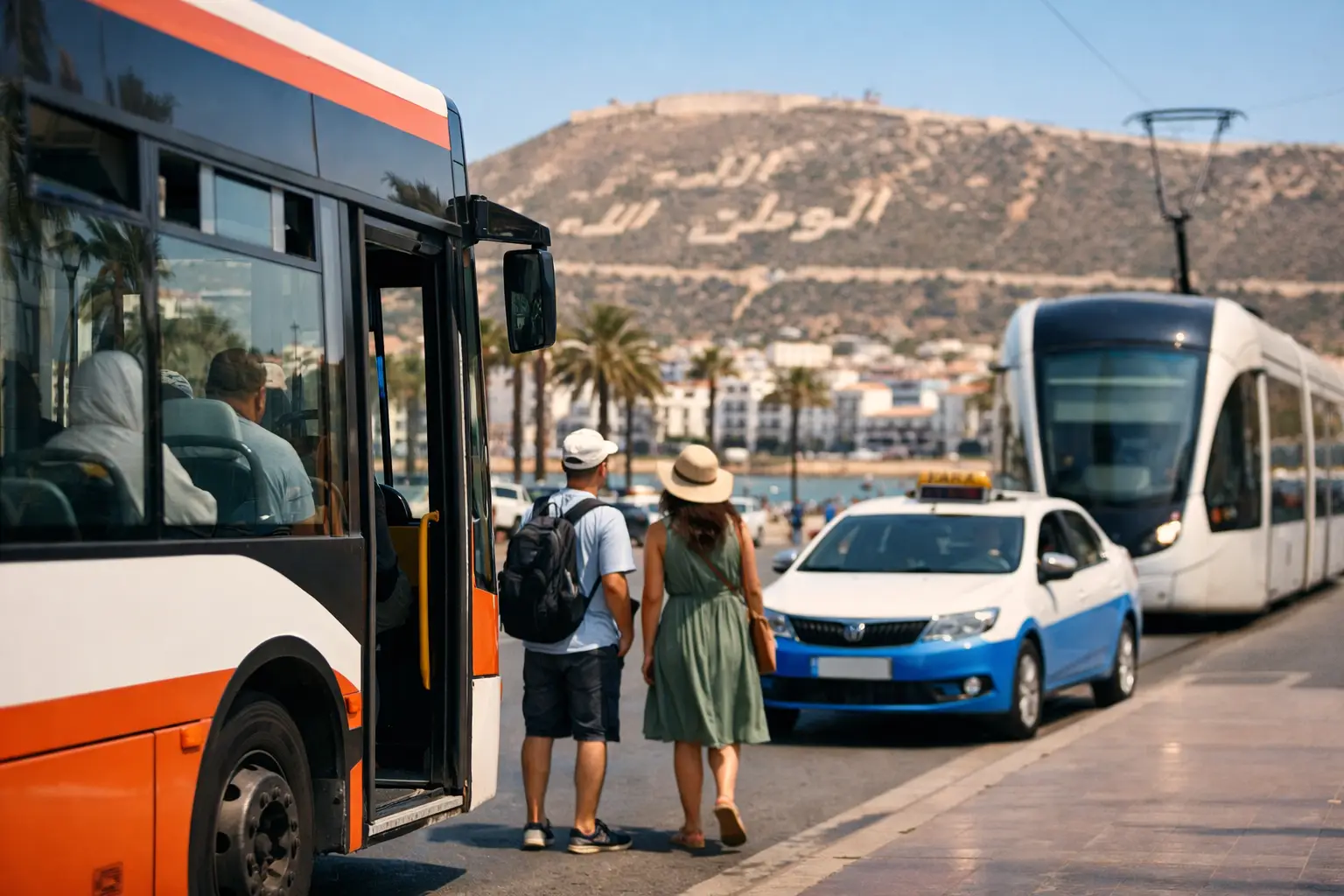
Agadir Public Transport Guide for Easy Travel
Getting around Agadir is simple when you know your options. Discover how to use buses, taxis, airport transfers, and walking routes to travel around the city with ease.
Agadir is built for getting out and seeing more. The beachfront, Marina, Souk El Had, Talborjt, and the city center are spread out enough that walking alone can feel limiting, especially in the afternoon heat. This Agadir public transport guide helps you choose the right way to travel, whether you are arriving with luggage, heading to the market, or planning a sunset trip beyond the promenade.
For most visitors, the practical answer is a mix of city buses and taxis. Buses cost less and are useful for everyday routes, while taxis are faster for direct journeys, evenings, and short trips with family or beach gear. Once you know which taxi to flag down and when a bus makes sense, moving around Agadir becomes simple and affordable.
How to get around Agadir
Agadir does not have a metro, tram, or central rail network. Local travel centers on ALSA city buses, small red-orange petit taxis, and larger white grand taxis. Each serves a different purpose.
City buses are the budget option for longer journeys within Agadir and nearby neighborhoods. Petit taxis are best for point-to-point rides inside the urban area. Grand taxis usually operate on shared routes and are more useful when traveling toward places beyond the city, including Inezgane, Aourir, Tamraght, and Taghazout.
If you are staying near the beach or Marina, many restaurants, cafés, and attractions are within walking distance. But the city’s best discoveries are not all on the seafront. A quick ride can take you from the resort zone to a busy local market, a neighborhood bakery, or an activity provider on the other side of town.
Agadir public transport guide: using city buses
ALSA operates Agadir’s urban bus network. Buses connect major areas including the city center, Talborjt, Dakhla, Hay Mohammadi, Inezgane, and several suburban districts. They are a useful choice for travelers who want to spend less, residents making regular journeys, and visitors who are comfortable with a little flexibility.
You generally pay onboard in Moroccan dirhams, so keep small bills and coins ready. Fares are low compared with taxis, although they can change, so confirm the current price when boarding. Tell the driver or conductor where you are heading if you are unsure whether the route stops nearby.
Bus stops can be easy to recognize on main roads, but route maps and schedules are not always presented in the way travelers may expect. Service frequency can vary by route, time of day, traffic, and season. That means buses work best when you are not on a tight schedule, particularly outside the central areas.
Google Maps can help you understand the distance between neighborhoods, but treat live bus details as a guide rather than a guarantee. Ask your hotel, host, or a nearby shop which stop and route number to use for a specific destination. In Agadir, local advice can save you a long wait or a ride in the wrong direction.
Buses are usually busiest during morning and late-afternoon commuting periods. If you are carrying surfboards, large suitcases, or several shopping bags from Souk El Had, a taxi will be more comfortable. For a light day bag and an unhurried itinerary, the bus is an easy way to experience the city beyond the tourist center.
Bus etiquette that makes the ride easier
Board promptly, keep your belongings close, and offer a seat to older passengers or anyone who needs it. A few French words can help, but you do not need fluent French or Arabic to get around. Show the name of your destination on your phone, pronounce it as best you can, and stay friendly.
It is also wise to avoid assuming every bus runs late into the night. If dinner plans or a return from an outlying neighborhood will keep you out after dark, plan on taking a taxi back to your accommodation.
Petit taxis: the easiest choice inside the city
Petit taxis are Agadir’s small, red-orange cars. They operate within the city limits and are the most convenient way to make short trips between hotels, restaurants, shopping areas, the beach, and attractions such as the Medina or the cable car area.
These taxis may pick up more than one passenger when seats are available. This is normal local practice, especially on common routes, and it can keep fares low. If you prefer a private ride, say so before getting in and agree on the arrangement first.
Fare practices can vary. Some drivers use a meter, while others may quote a price, particularly for tourist-facing pickup points, late-night rides, or trips where the destination is less familiar. Ask for the meter at the start when available, or confirm the fare before the car moves. Doing this calmly avoids awkward discussions at the end of the ride.
For short urban rides, keep expectations realistic: prices are usually modest, but the exact amount depends on distance, traffic, time, and whether the ride is shared. Carry small Moroccan dirham notes. Drivers may not always have change for a large bill.
Taxis are especially worthwhile after a long beach day, when traveling with children, or when the summer heat makes a 25-minute walk feel much longer. They are also a better choice for first-time visitors arriving at a bus station or trying to find a restaurant tucked away in a residential neighborhood.
Grand taxis for Inezgane, Taghazout, and beyond
Grand taxis are larger white vehicles that often run as shared transport. They depart from designated taxi stands and commonly leave once enough seats are filled. They are an affordable, local way to reach destinations outside central Agadir, but they are less predictable than booking a private transfer.
For Inezgane, grand taxis are practical and frequent. For coastal stops such as Aourir, Tamraght, and Taghazout, they can work well if you are traveling light and do not mind sharing. Surf travelers with board bags, families with strollers, or anyone on a fixed schedule may be better off arranging a private taxi instead.
Before you get in, confirm three things: the final destination, whether the fare is per person, and whether the car will leave immediately or wait for more passengers. If you want the whole vehicle, ask for the full-car price. This is more expensive, but it gives you control over the departure time and luggage space.
For longer regional travel to places like Essaouira, Taroudant, or Tiznit, use an intercity bus service or arrange a tour or private transfer. Grand taxis can cover some longer routes, but comfort, safety expectations, and departure conditions vary. For a relaxed day trip, a planned option is usually the better experience.
From Agadir Al Massira Airport to the city
Agadir Al Massira Airport is outside the main resort area, so airport transport needs a little planning. Taxis are the most straightforward option, especially after an evening arrival or when you have luggage. Confirm the fare before departure, and use the official taxi area rather than following unsolicited offers inside the terminal.
A public bus connection may be available through routes serving the airport area and Inezgane, but it is not the most convenient choice for most first-time visitors. It can involve waiting, a connection, and a final taxi ride to your hotel. If your priority is the lowest possible cost and you are traveling light during daytime hours, it may suit you. If your priority is an easy arrival, take a taxi or prearrange a transfer.
Smart local tips for stress-free travel
Start every day with enough small cash for buses, taxis, water, and market purchases. Cards are accepted at many hotels and larger venues, but cash still makes everyday transport much easier.
Write down your hotel name and neighborhood, not just the hotel brand. This is useful when catching a taxi at night or returning from the souk. If you are staying in Taghazout, Tamraght, or another coastal village, be clear that you are not asking for a ride within Agadir itself.
Keep a flexible mindset around timing. Agadir is easygoing, and traffic can build around busy avenues, school hours, market areas, and summer evenings. Leave extra time for reservations, tours, and airport departures rather than relying on a last-minute ride.
For travelers who want a more curated day, Visit Agadir can help you pair transport choices with places worth the journey, from local dining and family activities to coastal experiences. A route is more useful when it leads somewhere memorable.
The best way to travel around Agadir is not always the cheapest or fastest option. Take the bus when you have time to wander, choose a petit taxi when convenience matters, and plan ahead when the coast or countryside is calling. That balance leaves more room for the beach, the food, and the unexpected places that make the city feel like yours.
Keywords: Agadir public transport







Own a business in Agadir?
Get discovered by thousands of visitors.